Rachel Kurzius
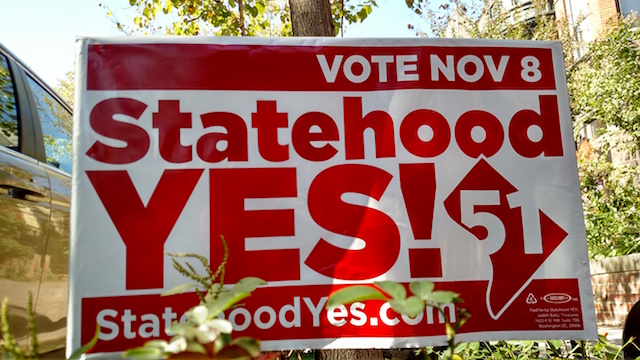 Photo by Tim Brown.
It’s official: a statehood bill for D.C. has been introduced in the U.S. Senate, though the chances of anything else happening with it are about as slim as they come.
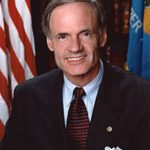
Senator Tom Carper (D-DE) put forth the bill on Thursday with 18 co-sponsors, all Democrats or Independents.
“District of Columbia residents work, study, raise families and start businesses here in this beautiful and thriving city, just like people in the 50 states of our union,” says Carper over email. “It is incumbent upon those of us who enjoy the right and the privilege of a voice and a vote in Congress to take up the cause of our fellow citizens here in the District.”
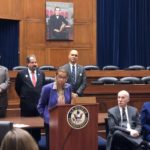
In early March, Carper joined D.C. Delegate Eleanor Holmes Norton and a slew of District politicians on the Hill to lay out the case for statehood and introduce the House bill. Notably, he was just about the only person at the lectern who actually has a vote if and when the bill makes it through committee and beyond.
The bill “to provide for the admission of the State of Washington, D.C. into the Union” comes after D.C. voted with an overwhelming majority in favor of becoming the 51st state in November. That referendum requires that D.C. formally petition Congress for admission into the union.
A quick reminder about why D.C. wants statehood: while we’ve got a larger population than two states and pay more taxes than 22 of them (and more per capita than all of them), we still don’t have a vote in the House or the Senate. That means that Congress can, and does, meddle in D.C. affairs.
This isn’t Carper’s first foray into home rule advocacy. He introduced a statehood bill in 2015 (which, if you’re looking for signs of progress, had one fewer original co-sponsor), and held a hearing on the subject in the Senate for the first time in decades. Unfortunately, most of the other senators skipped it.
The bill would make D.C. Douglass Commonwealth, and give it two senators and a voting House member. It was referred to the Senate Committee on Homeland Security and Governmental Affairs. While Carper used to be the ranking member of that committee, that role now belongs to Senator Claire McCaskill (D-MO), another co-sponsor of the legislation.
The committee chair, Ron Johnson (R-WI), makes the final call whether the bill gets considered in committee. We’ve reached out to the committee for comment on scheduling, and will update if we hear back.
While Johnson did not join House attempts to block D.C.’s Death With Dignity Act, statehood is often viewed as a partisan fight because the District’s population trends Democatic. As Ohio Governor John Kasich said, statehood would mean “more votes in the Democratic Party.”
But even if the bill isn’t likely to see much more action, Carper uses uplifting sports metaphors to describe the District’s 216-year (and counting!) struggle for home rule. “We’re gonna keep taking the shot,” said Carper in March. “And eventually, we’ll score the goal.”
The original co-sponsors are Tammy Baldwin (D-WI), Cory Booker (D-NJ), Sherrod Brown (D-OH), Ben Cardin (D-MD), Chris Coons (D-DE), Catherine Cortez Masto (D-NV), Al Franken (D-MN), Kirsten Gillibrand (D-NY), Maggie Hassan (D-NH), Tim Kaine (D-VA), Ed Markey (D-MA), Claire McCaskill (D-MO), Patty Murray (D-WA), Bernie Sanders (I-VT), Brian Schatz (D-HI), Chuck Schumer (D-NY), Chris Van Hollen (D-MD), and Elizabeth Warren (D-MA)
Washington, D.C. Admission Act by Rachel Kurzius on Scribd