Rachel Kurzius
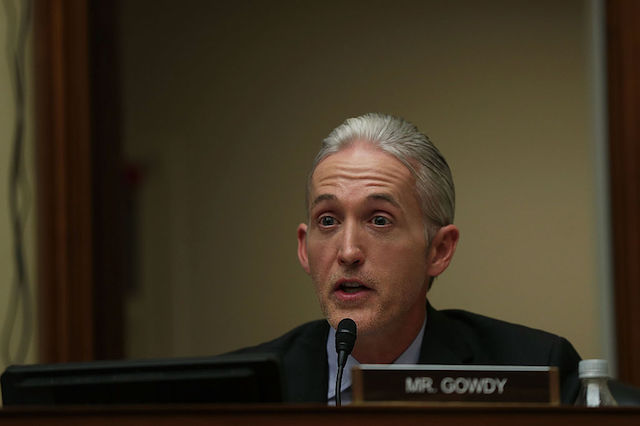 (Photo by Alex Wong/Getty Images)
Could it be … a new boss that isn’t quite the same as the old boss?
Congressman Trey Gowdy is now the chairman of the House Committee on Oversight and Government Reform. The role is also colloquially called the “D.C. overlord,” because the committee is charged with broad control over District laws and finances.
But the South Carolina Republican says that he doesn’t want to interfere in local D.C. affairs.
“I was not elected the mayor of the District of Columbia. I couldn’t be elected mayor of the District of Columbia. And I don’t think the mayor of the District of Columbia would do very well in my district,” Gowdy told the Wall Street Journal.
All true. And yet, that didn’t stop his predecessor, Jason Chaffetz, from acting like he had a mandate to protect D.C. from its own elected officials.
Chaffetz, who stepped down this month, was a big fan of disapproval resolutions, which allow members of Congress to outright block District laws from taking effect if the House and Senate pass it and the president signs it. Only three have ever passed in the history of the process, but Chaffetz has tried (and failed) to use it on issues like medical-aid-in-dying, reproductive discrimination, and medical marijuana.
Chaffetz also threatened to jail Mayor Muriel Bowser for implementing marijuana legalization in the District, and tried to prevent same sex marriage from becoming legal here.
His meddling made him a target at D.C. rallies and phone banking campaigns, and Ward 1 Councilmember Brianne Nadeau made Chaffetz his very own nameplate and invited him to a council hearing given his “interest in managing the affairs of the District of Columbia.” A D.C. political action committee called Americans For Self-Rule formed with the intent of unseating the congressman they called a “despot.”
Gowdy’s take on the oversight role is consistent with an interview he gave The Washington Post in 2011, after he became the head of a House Oversight subcommittee that included D.C. in its jurisdiction. “I’m going to provide oversight. I’ll do it fairly, I’ll do it completely, but I’m not interested in being the mayor of the District of Columbia or the overlord or the overseer or whatever else they want to call it,” he said.
Gowdy served as a federal prosecutor before being elected to Congress in 2010 where, so far, his most visible post has been heading up the House Select Committee on Benghazi.
So far, D.C. Delegate Eleanor Holmes Norton seems cautiously optimistic about Gowdy’s ascension. “I look forward to working with Trey on federal matters affecting D.C.,” she tweeted on Tuesday.
But advocates for self-rule in the District aren’t taking Gowdy at his word. “We sincerely hope Mr. Gowdy continues to recognize District residents’ right to self-determination and respects our decisions to address local issues of concern through our democratic process regardless of whether he agrees with the policy outcome,” Americans for Self-Rule said in a statement. “If he walks back on his public statements and interferes in District affairs, we will ensure he feels the same pressure we applied to his predecessor.”