 Rachel Sadon
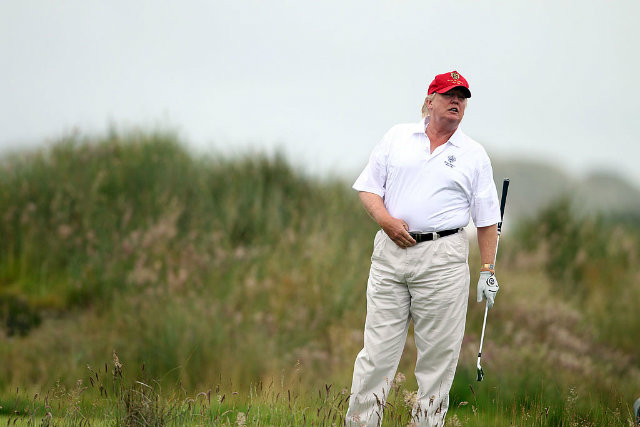 Donald Trump plays a round of golf after the opening of The Trump International Golf Links Course on July 10, 2012 in Balmedie, Scotland. (Photo by Ian MacNicol/Getty Images)
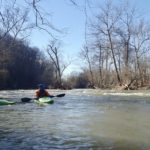
Attorney and competitive kayaker Adam Van Grack was paddling up from the Seneca Breaks on the Potomac River earlier this month when a motor boat sped up to his side. Two armed men told Van Grack that he needed to get to the other side of the river—immediately.
Every time that President Donald Trump decides to play golf at Trump National Golf Club in Sterling, Virginia, one of the river’s most popular kayaking and canoeing spots—used by children all the way up to Olympians—is disrupted. As the Coast Guard moves to implement a permanent security zone in the area, boaters fear that it will severely curtail enjoyment of the area for hundreds of people at a time.
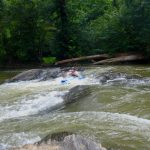
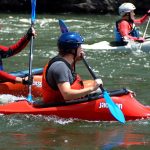
“Shutting down the river so Trump can play golf is impacting a lot of people, not only us recreational paddlers who are out here for fun,” says Susan Sherrod, the chairman of the Canoe Cruisers Association, a club and advocacy organization in the area. Several members of the U.S. canoe and kayak team use it regularly for training and Team River Runner paddles in the zone with wounded veterans. A boating school sits on the Maryland shore, and dozens of groups come from outside of the area come to teach kayaking on this section of the river, which offers both flat water and Class 1 and 2 rapids. Motorboats, stand-up paddle boarders, and fisherman are also common sights.
But when the president or other high-ranking officials decide to play golf at Trump National, the Coast Guard sets up a temporary security zone at the request of the Secret Service that places about two miles of the river off limits.
Since March 24, they’ve already done so five times. Given the president’s voracious golf habit, it seems all but certain that he’ll return.
Foreseeing the need for future security zones, the Coast Guard has implemented an interim rule in the Federal Register, effective July 10, that allows for a complete shutdown of the river to any use, motorized or non-motorized, between Sharpshin Island and Violette’s Lock. The Coast Guard is currently taking comments before making it a permanent rule.
“By making a permanent security zone there, it reduces the administrative burden of creating a temporary one every time it’s needed,” says Coast Guard spokesperson Amanda Faulkner. “The other positive about it is that now the public knows this is the location of the security zone for when we do activate it.”
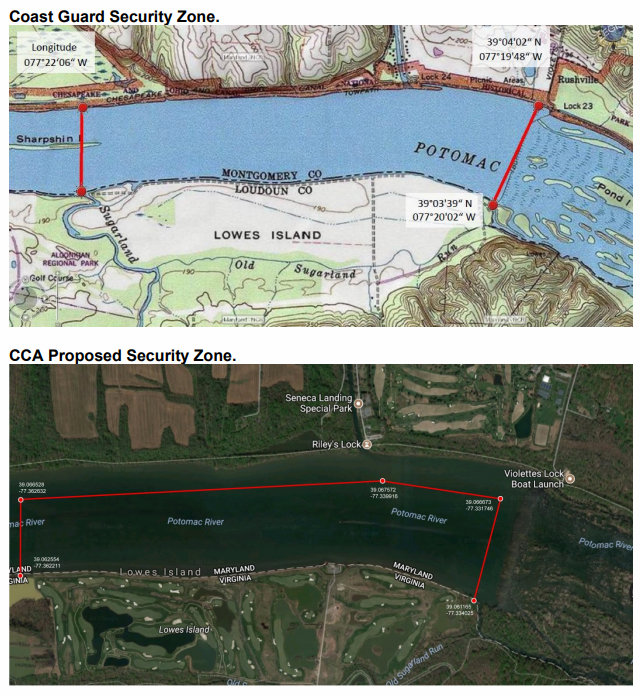 The permanent security zone proposed by the Coast Guard, above. The Canoe Cruisers Association is proposing a less restrictive area that would still allow for use of the river closer to the Maryland shore. (Courtesy of the CCA)
Boaters charge that what the Coast Guard has proposed, a permanent security zone that spans from shore to shore, is excessive.
“I have no problem with them imposing a boundary when Trump or any high ranking official is at the course. The problem is the ability to shut down the river entirely is an overreach,” says Van Grack, who is representing several of the businesses and non-profits that are affected. “We’re not talking about a narrow stretch of river… if you just take part of the river, which is what they’ve been doing in the past, that should be enough protection.”
The five previous security zones did, in fact, span from shore to shore, but Coast Guard officials allowed some boaters to continue paddling further away from the Virginia side, according to Faulkner. That’s what happened to Van Grack when he was training earlier this month; he was allowed to keep going, just closer to Maryland.
“For any security zone, you can receive permission to transit through,” Faulkner says.
Still, boaters fear that the Coast Guard will have permanent carte blanche to shut down the waters at any time, and river access will be completely unpredictable.
“My biggest fear is that I send a group of kids that paddle through the security zone, and I have no way of retrieving them and getting them back to camp,” says Matt Markoff, the founder and director of Calleva, an outdoor education non-profit that sits on the Maryland side of the restricted area. “I understand that they need to securitize the area. But, to me, it’s quite extreme and a little confusing on the degree that they want to shut down the river and river access.”
He’s already had one group of kayakers turned around from entering the old Patowmack Canal (also known as the GW Canal), which is accessed through Violette’s Lock.
If a complete, shore-to-shore ban were enacted, Markoff says the area would become a major bottleneck. “When you add motorboats to the mix, getting turned around, it just becomes a little bit of a potentially scary situation.”
The Canoe Cruisers Association has proposed a slightly narrower security zone, which still allows for access on the Maryland side of the river.
Faulkner says the public has until August 9 to make such comments and recommendations, which the Coast Guard will take into consideration when making the final rule.
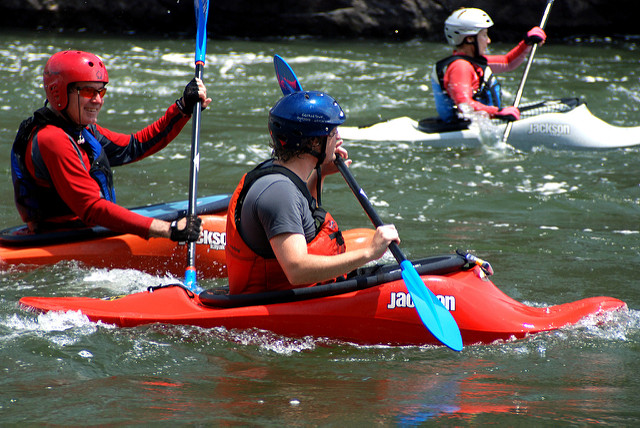 (Photo by outlandk)
“This is a river access issue, that Trump is coming out here to play golf on his own personal course instead of at the Army Navy or Congressional Country Club or Joint Base Andrews. There are other places he can play golf without shutting down our river,” Sherrod says.
She speculates that the real reason for the closure is a fear of more aquatic protests. In May, a group of kayakers floated by during the Senior PGA Championship holding up brightly colored banners that read “Resist” (a police boat ushered them away).
The Coast Guard denies the charge, saying that the decision is entirely based on ensuring safety and security. It implements the restricted zone at the request of the Secret Service, which could make the request not only for Trump but any high-ranking official that they determine needs extra protection. Faulkner declined to say who qualifies as such an official or what the maximum length of time the river would be shut down, saying the Secret Service makes such determinations.
There’s an additional irony to the situation.
In 2010, Trump clear cut nearly 500 trees to give his guests a view of the idyllic river, sparking the ire of environmentalists who said it would exacerbate runoff and degrade the waters. Thousands of people signed a petition in 2015 demanding that the then-presidential hopeful replace the trees.
“If he’d not cut down those trees, he’d be hidden completely from sight,” Sherrod says. “Wanting to give his customers a great view of the Potomac has resulted in anybody paddling on the river can see him on the course.”
Between the kids taking lessons, wounded veterans working on healing, recreational paddlers, and professionals in training, it amounts to hundreds of people a day.
“That stretch of river is one of those special spots. It’s a really unique area to get away from a city environment and get back in touch with nature and enjoy the water,” says Rhys Gerholdt, a communications manager and recreational kayaker, who has frequented the spot for years. “There’s maybe only two or three other spots near D.C. that really give you that. It would be a real shame to lose that area.”