 Rachel Sadon
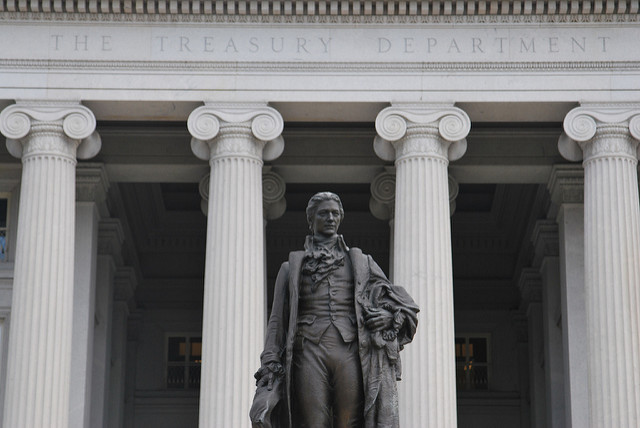 (Photo by Adam McLane)
“I wrote my way out,” Alexander Hamilton tells audiences in the hit musical that’s the only reason why we’re talking about the nation’s first treasury secretary in 2017.
Hamilton’s notoriously prolific writings—some 12,000 of them—are now available online, courtesy of the Library of Congress.
“Alexander Hamilton is certainly having his moment and I am so thrilled that people can learn more about him—actually read his descriptions of Revolutionary War battles, read letters to his wife, see the cross-outs in his draft of George Washington’s farewell address and so many other things,” said Librarian of Congress Carla Hayden in a release. “Sharing this history is what the library is all about.”
The federal government acquired the bulk of the writings in 1848, when Congress appropriated $20,000 to buy the papers from his family. The State Department had the papers until 1904 when the institution’s historical papers were all moved to the Library of Congress. Most recently, the library acquired 55 letters and other documents from Hamilton’s father in-law, Philip Schuyler, to Alexander and Elizabeth Hamilton, most which have never been published anywhere before.
The entire collection includes letters, legal papers, drafts of speeches, and other writings that span nearly his entire life. Here are some of the highlights, according to the Library of Congress:
• A letter written when Hamilton was 12 or 13 to his friend Edward Stevens describing his wish to raise his station in life;
• The outline of Hamilton’s speech at the Constitutional Convention;
• Hamilton’s draft of George Washington’s farewell address;
• His draft of the infamous Reynolds pamphlet;
• A letter to his wife, Eliza, written shortly before his fatal duel with Aaron Burr.
The Library of Congress has also recently made collections available online for historical figures that weren’t the subject of hit musicals. They include the papers of Millard Fillmore, Franklin Pierce, William Henry Harris, and Sigmund Freud; more than 4,600 newspapers from Japanese-American internment camps; and web comics.