With breakout films by such directors as Edward Yang, Chen Kaige, Hou Hsiao-Hsien, and others that would become arthouse favorites, the ’80s and ’90s ushered in a New Wave of Chinese cinema made outside the mainstream national film system. From September 21-24, The DC Chinese Film Festival will give local viewers a crash course in this inventive cinema (whose directors are sometimes known as the Sixth Generation) with films that can be hard to come by on the usual streaming platforms. All screenings are at Landmark E Street Cinema. See the full schedule here.
 (Film Society of Lincoln Center)
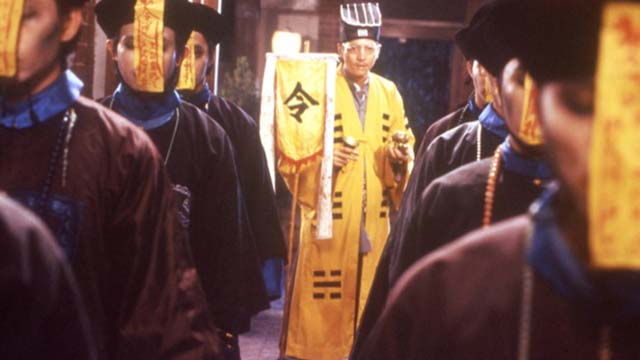
A Taoist priest (Lam Ching-ying) reluctantly accepts an assignment from Yam (Huang Ha), a wealthy businessman who wants to exhume his deceased father and rebury him to bring good luck to the family. But this greedy power play angers the ancestors, and perhaps the only way to defeat this ancient evil is with other spirits. In what is perhaps the festival’s most lighthearted entry, this 1985 horror comedy introduced audiences to Chinese hopping ghosts, a fantastical variety of undead that must be controlled with great care. The movie spawned several sequels and a whole subgenre of supernatural kung fu comedies—and if you look closely, you might even see its influence in the upcoming Kingsman sequel, which features a virus who’s “dancing” phase seems to riff on one of the ways that victims of vampire bites can fend off becoming a corpse.—Pat Padua
Watch the trailer.
Friday, September 22 at 9 p.m.
 (MUB!)
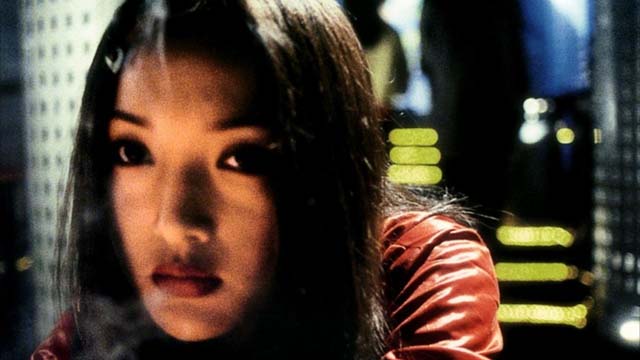
Though it’s easy cinephile shorthand, calling Suzhou River “Vertigo meets Wong Kar-Wai” is a mite reductive. Director Lou Ye sets his film apart from other popular Sixth Generation works by sanding down the glamorous edges of genre to arrive at a uniquely neorealist take on noir conventions. The script relies heavily on a pulpy plot conceit, but the visual execution, with its beautifully gritty 16mm film grain, saps it of sensationalist hallmarks of style, like a full color painting that’s had the vibrancy sucked from the edges. Two dueling love stories swirl in concentric circles around one uncanny likeness, as a faceless videographer (Hua Zhongkai) begins dating a club dancer (Zhou Xun) being stalked by a former criminal (Jia Hongsheng) who thinks she’s his lost lover. The inherent Hitchcock homage implies a paradigm shifting twist, but the film’s emotional climax is doubly devastating, commenting on the difficulty of romance and life on the fringes of Chinese society. The festival will be screening a 35mm print.—Dominic Griffin
Watch the trailer.
Thursday, September 21 at 7:00 p.m.
 (Film Comment)
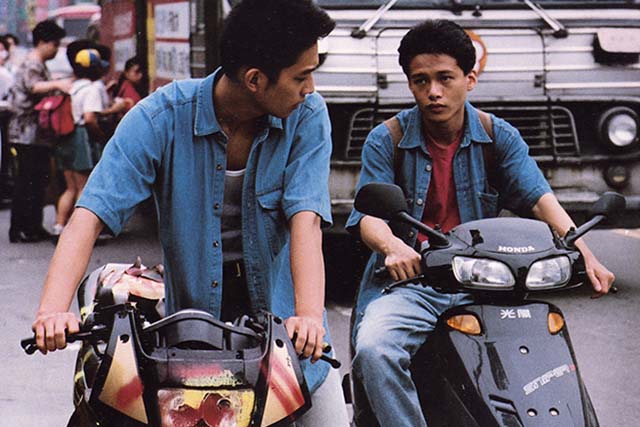
Centered around a sullen student (Lee Kang-sheng) and two young thugs (Chen Chao-jung and Jen Chang-bin) whose narratives are beset on a collision course, Rebels of The Neon God is as much a calling card for filmmaker Tsai Ming-liang as it is a timeless distillation of urban ennui and the complex inner lives of the youth. At first, the film’s naturalistic tone makes it feel too casually paced, but that slow burn builds throughout, allowing for some powerful observations and connections to be drawn between the disparate lives of its diametrically opposed protagonists. It’s a testament to Ming-liang’s gifts as a storyteller that a film that takes place predominantly in shopping malls, arcades and sparse bedrooms feels as rich in texture and as potent in emotional depth.—Dominic Griffin
Watch the trailer.
Sunday, September 24 at 7:30 p.m.
 (Central Motion Pictures)
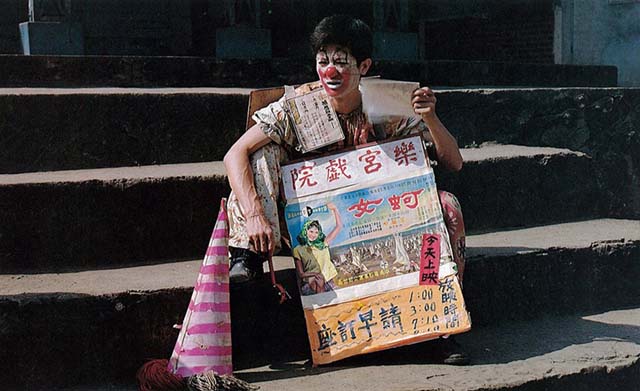
This seminal 1983 Taiwanese New Wave anthology film is split between three separate short stories, each helmed by a different director. Wan Jen provides “The Taste of Apple”, a story of a Chinese laborer hit by an American official’s car and the horrific way his family is plied with consumerist apologia in lieu of decency or compassion. “Vicki’s Hat” is a darkly comic story from Tseng Chuang-hsiang about two young men hawking a faulty rice cooker with a satirical bent that causes as much laughter as it does existential dread. But perhaps the finest of the three comes from Millenium Mambo director Hou Hsiao-hsien, whose “Son’s Big Doll” is a stirring portrait of a man who dresses like a clown and wears a sandwich board (hence the anthology’s title) to feed his newborn son. Each short has its cinematic merits, but it’s Hsiao-hsien’s, the first of the three, that lingers the longest once the credits roll, at times calling to mind De Sica and Chaplin, while displaying a distinctly Chinese meditation on Taiwan during the Cold War.—Dominic Griffin
Watch the trailer.
Saturday, September 23 at 2 p.m.
 (The Criterion Collection)
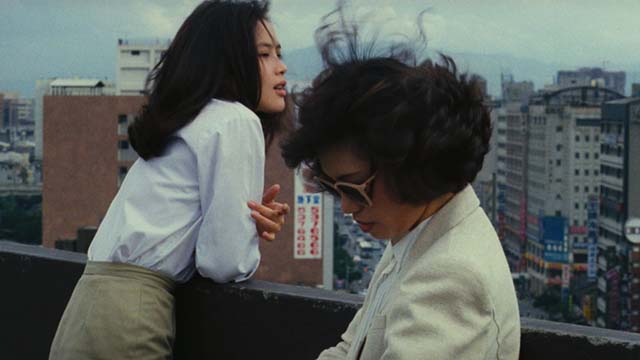
A young woman (singer Tsai Chin) and her boyfriend (Hou Hsiao-hsien, a rare role in front of the camera) navigates the social and business worlds of Taipei in this 1985 drama that was one of the first landmarks of the New Wave of Taiwanese cinema. Director Edward Yang.went on to direct such arthouse favorites as Yi Yi), and this early film takes a cue from Michelangelo Antonioni in the way its characters feel oppressed by depressing modern architercture—as architect Mr. Ke (Ke I-cheng) observes from a high-rise balcony, looking over the skyline he can’t even tell which of the similarly banal buildings are his. The film features what is likely the most depressing use of Kenny Loggins in cinema. Yang’s work is more accessible on home video than it used to be, but with its precise compositions and frequent evening shots, this is a movie that works better on the big screen.—Pat Padua
Watch the trailer.
Saturday, September 23 at 4 p.m.