
 Rachel Kurzius
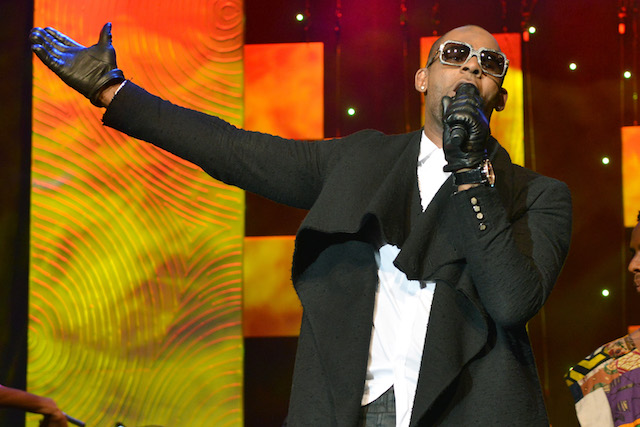 R Kelly. (Photo by Larry Busacca/Getty Images for NARAS)
Hitting the dance floor on a Saturday night often entails hearing “Ignition: Remix,” the R Kelly song that reminds us all, “It’s the freakin weekend, baby I’m about to have me some fun.”
But as women and their families continue to come forward with stories of sexual, physical, and emotional abuse at the hands of the R&B megastar, supporting allegations that started to emerge in the mid-1990s, hearing his hypersexual jams has become decidedly less fun. As Very Smart Brothas put it, “His art and his actions are irrevocably linked … He makes crazy, nasty, deviant sex music because he’s a crazy, nasty sex deviant.”
For that reason, D.C. DJ collective TROPIXXX doesn’t play R Kelly, or other artists who’ve been accused of sex abuse or who otherwise make known their bigoted views in public or through their lyrics.
“There’s too much good music in the world to have to play music from people that are bad people,” says Mathias Brohm, who goes by the DJ name Mathias when he spins at venues like Brixton, Marvin, Policy, and more.
He says the R Kelly news stories have definitely impacted his decision not to include the musician in his sets, and he has a list of artists he won’t play, which includes hip hop trio Migos, who’ve made homophobic statements in interviews, and Kodak Black, who was indicted earlier this month on charges of first degree criminal sexual conduct.
“If people come up and request them, I say ‘I don’t have it,'” says Brohm. “I literally delete it off my computer.”
Paige Plissner, a TROPIXXX member who has a residency at Rock and Roll Hotel as The Lothario, says, “You could make an artist disappear if you never play their music. We’re just local DJs, but as far as what you can influence in your immediate environment, I think we’re all trying to be more socially aware … The only way that we can not give that kind of behavior any sort of recognition is to not validate the people who are doing it.”
For her, that notion started with the news that R&B singer Chris Brown violently assaulted Rihanna in 2009, and has faced other assault and battery charges since. “Who you support and who you play does influence how other people experience those artists as well,” says Plissner.
There’s no formal policy for TROPIXXX, a collective born from a weekly dance party at Velvet Lounge and also includes The Clown Prince and Jackson Kachor, but “it’s something we all talk about,” says Plissner. “We want to create a positive atmosphere where people are dancing and enjoying themselves and don’t feel like they’re being attacked.”
Brohm says that, when it comes to lyrics, “There are some songs that I do love playing because the production is amazing, so I will get the clean version,” he says. “I’m sick of hearing women being referred to as bitches. I don’t know if I’m just getting older, but I feel uncomfortable playing it. I feel like it reflects on me.”
He says the reaction to the clean version in a room full of people well above the drinking age can be mixed. “People think I take music and lyrics too seriously and I do, because it’s my job,” he says. He adds that the idea people aren’t even paying attention to the lyrics is silly, because “they’re singing the lyrics out—they’re obviously listening to them.”
Of all the music he’s had to nix, he probably misses playing Migos the most. “They’re kind of like the Pitbull of rap music,” he says. “A room is still and you play Migos and the room goes nuts.”
But there are other crowd pleasers who he feels good about blaring through the speakers. “Fetty Wap is a big name and he’s not degrading to women,” says Brohm. “T-Pain is another one,” as is modern Jay Z.
Plissner says that it’s tougher to navigate the Top 40s music scene in this regard than it is when playing club music, partially because it doesn’t have lyrics, though that’s not the only reason.
“There are artists in the dance music community that have been accused of sexual assault, but those are people who I would never play their music to begin with,” she says.
She says she never really played R Kelly. “R Kelly has had those stories about him peeing on 14-year-old girls for a while, so I just won’t download people’s music.”
Still, though, she wonders about the behavior of musicians from previous generations or those who may have an abusive background that hasn’t yet been made public. “There’s a really high probability that literally everyone’s music we play has a history of doing something bad,” says Plissner. “But that points out how super shitty things are.”


