Natalie Delgadillo
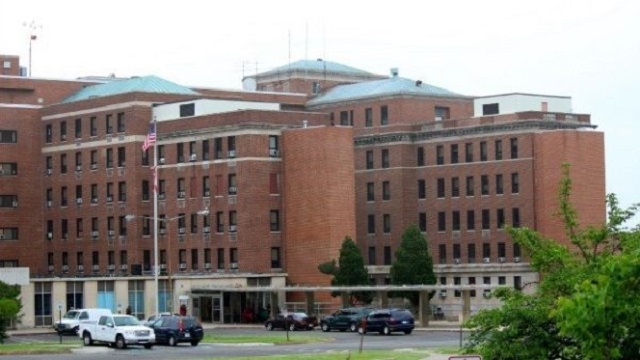 (Photo by Martin Austermuhle/WAMU)
The D.C. Council approved watered-down emergency legislation on Tuesday mandating stricter oversight of D.C. General’s deconstruction while the Council is out of session during the summer.
The legislation comes amid controversy over the timeline for the closure of the shelter: while advocates have long wanted the dilapidated, rat-infested former hospital to close down, they’ve opposed the Bowser administration’s rush to do it before all six of the replacement shelters are ready. They’ve also expressed concern about demolition beginning while families are still living on site.
“It comes down to what amount of risk is D.C. willing to take for the health of homeless children and families and women when there’s no reason, no legitimate reason that I’ve heard, for why this [closure] has to happen now,” Amber Harding of the Washington Legal Clinic for the Homeless told DCist last month. (For a detailed explainer of what’s going on with D.C. General, see here).
On the heels of all that controversy, Ward 8 Councilmember Trayon White introduced a draft of emergency legislation last week that halted demolition on the D.C. General campus until all the families living there had moved out.
On Monday, dozens of D.C. advocacy organizations and lawyers submitted a letter to the D.C. Council urging them to support White’s legislation. But by Tuesday morning, the Washington Legal Clinic for the Homeless had tweeted that it was withdrawing its support, and other organizations followed soon after.
We have seen a new draft of @trayonwhite emergency legislation on #DCGeneral. We no longer support this bill. It will not protect the health of homeless families and it will not ensure their safe placement. We ask the Council to pass something real, or pass nothing at all.
— Legal Clinic (WLCH) (@WashLegalClinic) July 10, 2018
Reporting requirements—without enforcement measures—won’t ensure that DC children & families are living in safe, healthy environments. #DCGeneral https://t.co/IO7lChQdCH
— Children’s Law Center (@DCChildrensLaw) July 10, 2018
Through apparent negotiations between councilmembers, White’s original legislation had been amended to completely remove any mention of halting demolition. Instead, it instituted oversight measures requiring Bowser’s office to report updates on the number of lead and asbestos samples taken at the demolition site and whether any of the samples exceed federal standards. It also calls for the Council to receive weekly reports about the number of families that have exited and how many still remain at D.C. General.
“These reporting requirements aren’t effective. They’re being reported to the Council when the Council is not even in session,” says Kathy Zeisel of the Children’s Law Center, which supported the original version of White’s bill. “There’s nothing that triggers enforcement or any next step. It doesn’t even say what happens if they find [elevated levels of] lead and asbestos.”
White acknowledged advocates’ discontent with the newest version of his bill at the start of the discussion on Tuesday.
“Unfortunately, I was not able to include [language halting demolition] because of the fiscal impact, and as we know we can’t introduce something with a fiscal impact in emergency legislation,” White said. “Some say this [bill] does not do anything. I beg to differ that we as a body have a responsibility to oversight.”
We really appreciate that @trayonwhite took initiative to try to help #DCGeneral families. But due to active opposition to his original bill by @MayorBowser, including a $950k fiscal impact for delaying demolition, he couldn’t move the original forward.
— Legal Clinic (WLCH) (@WashLegalClinic) July 10, 2018
White’s bill was introduced as emergency legislation, which is basically a way to fastrack timely legislation on a temporary basis. Emergency bills need nine council votes to pass instead of the usual seven, and they’re only in effect for 90 days. Chairman Phil Mendelson repeated later in the meeting that emergency legislation must be funded.
Despite their significant compromises with the bill, Councilmember frustration with Bowser’s office was clear, particularly from Councilmember Robert White. He concluded that he believes the Administration is protecting D.C. General residents from lead and asbestos during the demolition, but “the administration is not protecting families from the recognition that our priority is apparently to remove them…even if we don’t have shelters ready, even if it’s not what they desire,” White said at the meeting. “It’s clear the executive doesn’t see the council as a partner in this, so we have to codify oversight that should not be necessary.”