 Rachel Sadon
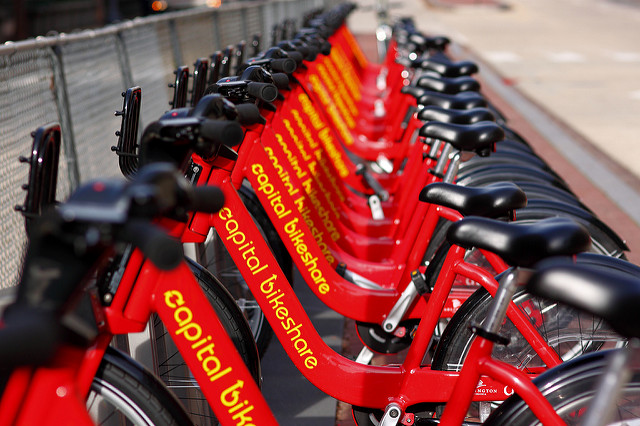 (Photo by Mr.TinDC)
Going to drop off a Capital Bikeshare and frustratedly finding that there are no open spots is such a common experience that it even has a nickname: getting dockblocked. But a new “Bike Angels” reward system aims to make it a less frequent occurrence, by incentivizing riders to bring bikes to less crowded stations.
The new program works like this: riders who have signed up to be a Bike Angel can see an extra layer on their map. They earn points based on the amount assigned to their pickup and drop-off locations, earning as many as three points at a time. (For full details of how points work, see their website.)
At the end of the month, riders with 10 points get a free 24-hour membership to give to a friend. For every 20 points riders earn, they get a free one-week membership extension (up to four, or 80 points, in a month). Capital Bikeshare plans to release additional rewards throughout the year, and will also track lifetime points earnings.
Capital Bikeshare is hardly the first citywide transportation programs to incentivize users to change their behavior. Ofo (which recently ended its D.C. operations) offered discounts to riders who parked its dockless bikes in certain areas and electric scooter company Bird pays riders to charge the devices. And those of us fogeys who have been using Car2Go for a long while will remember a time when drivers earned free drive time for filling up the tank.
Capital Bikeshare also has five downtown “corrals” that guarantee riders a spot during the morning commute and a staff of “rebalancers” that move the system’s 4,300 bikes around so riders don’t find completely full or empty stations.
But it’s a costly endeavor. As of a few years ago, rebalancing bikes represented 55 percent of Capital Bikeshare’s operating costs.
Since New York’s bikesharing system began its “Bike Angels” reward program, as many as 40 percent of Citi Bikes are now rebalanced by users (both Citi Bike and Capital Bikeshare are operated by the same company, Motivate). More than 30,000 people have signed up for the program in New York, with a core of power users who jockey for positions on a leaderboard.
“Things seem like they’re globally out of control … Humanitarian and refugee crises, nationalism is spiking again,” Joe Miller, who held the top spot for months, told Outside magazine.“There’s something about grabbing a bike from over here and moving it to there. I’ve effected change. It’s very simple.”
Previously:
Capital Bikeshare Releases Its First Official Mobile App