Rachel Kurzius
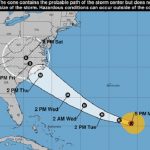
As the District readies itself for the potential impacts of Hurricane Florence, there’s at least one suggestion to prevent flooding that isn’t on the table … yet.
Since 2013, the National Mall Coaltion has been pushing for a huge structure beneath the National Mall. The idea is that the underground facility would serve a dual purpose: house more than 1,000 idling buses and cars, and, key in moments like this one, store 34 million gallons of floodwater.
It’s the brainchild of longtime D.C. architect Arthur Cotton Moore, who sees the project as a long-term solution to flooding on the National Mall. Moore is no stranger to designing on the waterfront—he was behind Georgetown’s Washington Harbour, which incorporates a floodgate to protect it from the Potomac River (the property management company’s failure to use those floodgates in 2011 led to flooding and damage).
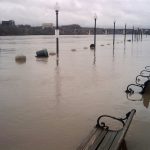
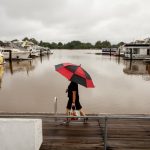
National Mall flooding is not an abstract notion—a 2006 storm caused millions of dollars in damage to the National Archives, Internal Revenue Service, and other federal buildings. Flood maps drawn in 2010 call the Federal Triangle a “flood zone,” including many of the city’s most iconic museums and buildings. The Army Corps of Engineers installed a floodwall on 17th Street SW, south of Constitution Avenue, the last part of a levee system that the National Park Service says it may deploy during Florence.
But with the potential for storm-driven floodwaters to increasingly threaten much of the National Mall, there’s room for solutions beyond sandbags.
Like so many projects in the nation’s capital, the National Mall Underground would require Congressional approval. D.C. Delegate Eleanor Holmes Norton introduced an amendment in 2013 to create a report to “provide recommendations and a cost estimate to construct and operate the facility,” according to a release from her office. That amendment failed, but the National Mall Coalition has continued to push for Capitol Hill to explore the project.
Jay Brodie, a board member for the National Mall Underground proposal in 2014, told DCist that time was of the essence. “This isn’t a matter of if there’s going to be another devastating flood like the 2006 storm,” he said. “It’s a matter of when.”