Martin Austermuhle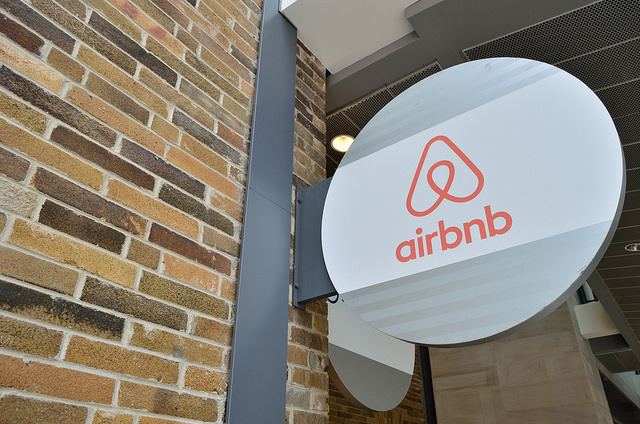
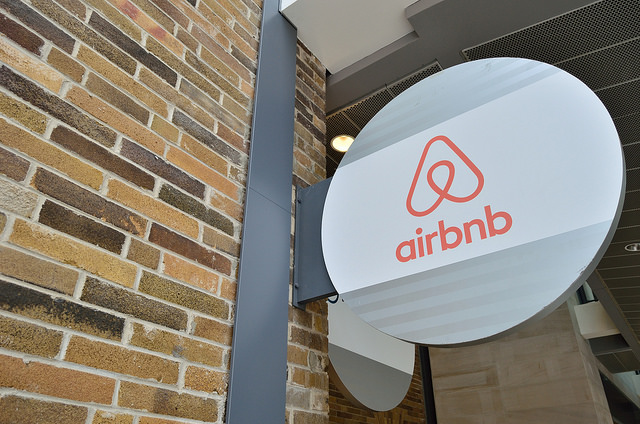 Photo by Open Grid Scheduler / Grid Engine.
A revised bill that will be considered by the D.C. Council next week would allow residents to rent out a room or part of their home on Airbnb and other home-sharing services, but put a 90-day annual cap on those rentals if the owner is not present in the home, and prohibit them from using the services to rent out second homes or apartments.
The bill, written by Chairman Phil Mendelson, comes 18 months after the Council held a contentious hearing over home-sharing, a practice that has gained in popularity in the city but has remained largely unregulated, even as surrounding jurisdictions have imposed their own rules and restrictions on it.
According to Airdna, which tracks home-sharing, there are more than 7,000 active rentals in D.C. on Airbnb alone. Of those, 5,000 are entire homes. There has been a dramatic spike in Airbnb rentals over the last eight years, from 137 in 2010 to more than 25,000 in 2018 so far.
Proponents say home-sharing allows owners to turn unused bedrooms, basements, and garages into a source of revenue, and lets visitors to D.C. see a side of the city the may not see from traditional hotels. But critics argue that home-sharing has cut into the city’s stock of affordable housing, as owners opt to rent out second homes to tourists instead of long-term residents.
Like in many jurisdictions across the country, legislators in D.C. say they are trying to thread the needle in writing regulations that allow homeowners to monetize bedrooms or basements in their primary residence, while dissuading owners of second homes from renting them out to short-term renters and curtailing commercial operators who may look to build a stock of houses and apartments to rent out on home-sharing services like Airbnb, FlipKey, HomeAway, and VRBO.
“It absolutely allows home-sharing because there is no limitation if it is the person’s primary residence and they are present,” said Mendelson of his bill. “What it does restrict is commercialization where it’s not one’s residence, it’s an investment property, and the owner of the property isn’t present.”
But an Airbnb representative speaking on background said the bill was overly restrictive, and an “obvious creation and push by the hotel industry and its front groups.” Airbnb and other home-sharing services point out that they willingly decided to remit hotel taxes to the city, and say they are willing to be regulated.
Airbnb has specifically pointed to what it called “smart regulations” adopted in Arlington County in late 2016 that allow homeowners to rent out bedrooms, basements or entire homes—provided they live there at least 185 days out of the year. Regulations adopted this year in Montgomery County have a 120-day cap on home-sharing when the homeowner is not present.
But Mendelson said his bill properly balanced homeowners’ ability to rent out rooms or their entire house and what he said are necessary protections against operators buying up homes for sole use as short-term rentals.
“More [homes] are going to available to ordinary tenants, and it also means we will not see investors buying up properties and basically creating hotels even though they don’t have a hotel license,” he said.
The bill would also require that homeowners using home-sharing services to be licensed with the city, have at least $500,000 worth of liability insurance, provide an emergency telephone number that can be answered 24 hours a day, and keep records of every rental for two years. It also imposes a graduated schedule of fines for violations: $500 for the first, $2,000 for the second, and $6,000 for the third, after which a person’s license would be revoked.
This story originally appeared on WAMU.