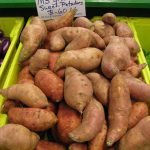
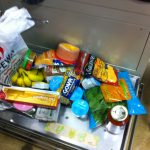
In the “you don’t really know until you try it” department, the self-described D.C. mom/policy wonk behind Half Changed World is conducting an experiment to see if she can stay under the U.S. Department of Agriculture’s Thrifty Food Plan for a family of four for a month. Her experiment arises from discussions related to hunger, obesity, and poverty, and seems to be a good way to experience first-hand how poor families have to make choices when they go to the market. The $434 monthly budget is about equivalent to the maximum benefits a family of four can receive in food stamps. Two weeks in to her effort, she has spent $210.87 on groceries, or just under half of her budget. She notes that her biggest revelation is how much of a privilege it is to be able to load up a shopping cart without paying attention to the total cost of the items in your cart.
She brings up some good points about the dynamics faced in making food choices. Working parents trying to juggle jobs and family time tend to look for quick and easy meals and, by and large, unhealthy quick meals are cheaper than healthier options. That puts an additional strain on poor families, as in most cases both parents have to work one or more jobs. Last April, the Amateur Gourmet sparked an interesting discussion on the topic of socioeconomic differences in food choices related to his post on entitlement and food.
The recently released Dietary Guidelines for Americans 2005 is one facet of the government’s effort to get Americans to make healthier food choices. The cornerstones of the new guidelines include decreased calorie intake and increased physical activity. Other recommendations include an emphasis on whole grains and limiting intake of trans-fatty acids. The guidelines will be used to revise the venerable USDA Food Guide Pyramid, due to be released this spring.