In the wake of a ruling by U.S. District Judge Colleen Kollar-Kotelly, the political blogosphere descended into hysteria this week, as the Federal Election Commission made intimations that they were poised to reconsider extending campaign finance reform laws to the Internet, which they had previously exempted from restrictions in 2002. During the past two years, savvy netizens took that freedom and ran with it. Because online partisans were allowed to coordinate with campaigns, popular political blogs became a clearinghouse of candidate banner advertisements, and many of the savviest turned their online ventures into successful engines of grass-roots financing, funneling thousands of dollars to candidates across the country.
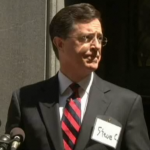
Will the FEC put the kibosh on weblogging rabble-rousers? In an interview on C|Net, FEC Commissioner Bradley Smith (at right) fanned the paranoid flames by warning that it could happen.  Smith stated that he and the other two Republican appointees on the commission wanted to appeal Kollar-Kotelly’s decision — which is not altogether surprising, considering the fact that regulating the Internet and determining the valuations of Internet links are precisely the sorts of government intrusions conservatives tend to rail against. For his part, Smith is on the record as saying that he’d like “someone to say that unpaid activity over the Internet is not an expenditure or contribution,” though he immediately offers a qualification: “… or at least activity done by regular Internet journals, to cover sites like C|Net, Slate and Salon.”