(Editor’s Note: DCist intern Judy Coleman continues her series on important legal cases that have shaped the District of Columbia. Be sure to check out Parts I and II.)
UPS ads these days ask, “What can Brown do for you?” Ask the question of Spottswood Bolling, the lead plaintiff in the school desegregation case Bolling v. Sharpe, and the answer would be “Everything.” Bolling was decided the same day in 1954 as Brown v. Board of Education and did for D.C. what Brown did for the rest of the states. At the same time, though, Brown, in a technical legal sense, did nothing for Bolling. The two cases had different histories, different litigation strategies and different constitutional arguments behind them.
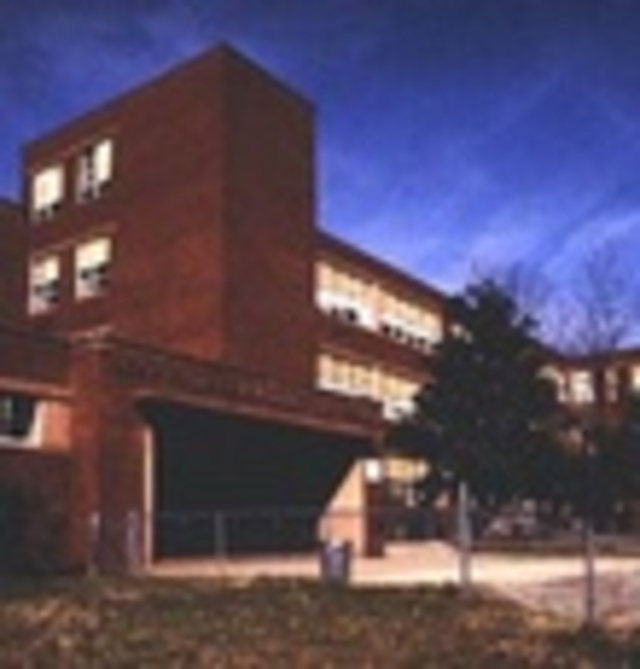
 It began, as most major litigation does in this country, with a group of angry parents. The Consolidated Parents Group of Anacostia, led by local activist Gardner Bishop, had tried to gain their children admission to the new John Philip Sousa High School (at right), which had been designated for white students. Sousa High, now a middle school, was modern and spacious by 1950s standards, and especially in comparison to the facilities provided to black students. Yet Sousa turned away the 11 plaintiff children, even when several of its classrooms were going unused.
Undeterred, Bishop organized the parents and brought the case to an NAACP lawyer Charles Hamilton Huston who, like the lawyers in Brown, had originally chosen to focus on the fact that segregation itself was not the issue, but rather the inequalities that seemed to flow from it. He wanted to request a new, high-quality high school for black students. Huston suffered from a heart attack before the case went to court, and the case changed hands to a professor at Howard named Samuel Nabritt. The new lawyer had a different strategy — one that departed from that used in Brown. Segregation itself was the constitutional violation.