The worst part about National Geographic magazine, if there is a worst part, is the between-the-pages fold. It cuts large images right in half. The pages are too small. It’s like a magazine for ants. How are we supposed to see the pictures if they can’t even fit them in the magazine? It needs to be at least … three times bigger.
 Until they make some changes, DCist has found a solution: check out the National Geographic exhibit “Pilgrimage: Photographs by Steve McCurry” showing through July 17 at the Meridian International Center. On display are 50 images drawn from McCurry’s work in India, Nepal, Cambodia, Afghanistan and Burma. They are large. They are real. And they are spectacular.
McCurry, who is responsible for the famous green-eyed “Afghan Girl” cover of National Geographic in 1985, achieves in his photographs such a sense of fineness in texture and reverence for his subject that it makes you forget to breathe.
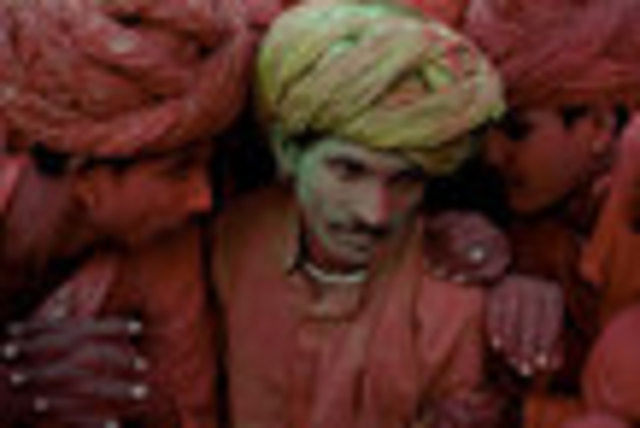
In one image, a group of nomadic women in Qandahar, Afghanistan, pray to Makkah at sunset. Although the photo is of the desert, vacant except for the dust and the believers, there is a palpable feeling that their spirituality transcends the surrounding oblivion. Another image of an Indian man dappled in ruby and copper rust colored powder gives you the sense that, despite being in a throng of religious celebrators, he is far away, by himself with his joy. The photographs permit you to stop and experience a single moment somewhere far away — a span of time that is manageable, allowing you to completely take in the richness of a scene without having to deal with an onslaught of images and sounds. McCurry’s photos are, in a word, potent.