Martin Austermuhle
 Smoking real estate market. Budget surpluses. New baseball stadium. Revitalized neighborhoods. Really makes the District sound idyllic, doesn’t it?
Maybe not.
A study released by the D.C. Fiscal Policy Institute yesterday may well throw some cold water on the city’s celebration of its good fortune, though. According to the study, which analyzed census data to determine economic changes in District neighborhoods from 1990 to 2000, income inequality in the city continues to grow, with top fifth of District households earning roughly 31 times what the bottom fifth earned. Moreover, of the city’s 39 neighborhood clusters, 11 of 13 defined as low-income lost neighborhood income while 26 clusters citywide bled upwards of 28,000 residents. Most shockingly, 34 of the city 39 clusters registered increases in the number of residents living in poverty from 1989 to 1999, and all but one low-income cluster lost middle- and upper-class residents. To quote the study:
These findings suggest, together with the findings on growing income inequality, that the District’s economic gains have not been shared by all of its residents. Increasingly, the District’s lowest-income households are being concentrated and isolated in neighborhoods that, over time, bear the brunt of the District’s declines in population and income. Low-income residents already find it difficult to afford quality housing, food, childcare, and health care. These declines in low-income neighborhoods make it difficult to sustain acceptable service levels — in education, child care, health care, retail and development, and quality affordable housing — because the income and population base that would support these services has been continuously eroding.
The rich get richer, the poor poorer, and they all move to Prince George’s County. If this is a boom, God forbid the day the District returns to recession.
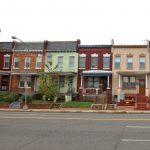
Picture above snapped by Seeking Irony. The full image can be see here.