Written by DCist Contributor Alexa Steinberg.
 As a young artist, Paul Cézanne painted not with a brush, but with a large palette knife, a technique he felt to be couillarde— roughly translated as ballsy. It was this sort of attitude that found him at home with contemporaries like Edouard Manet, Camille Pissarro, and Johan Jongkind, all of whom showed their work in the Salon des Refusés, the avant-garde response to the by then stuffy, conservative Salon de Paris.
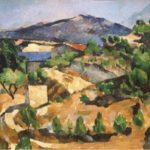
In the National Gallery of Art’s new big show, Cézanne in Provence, we see paintings and watercolors from the ballsy stage of Cézanne’s career through to his later landscapes and portraits, which, in their own way, were just as avant-garde.