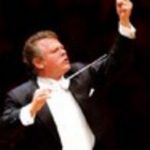
 This week, I cannot complain about not hearing enough Mahler. After hearing the multiphonic performance of Mahler’s eighth symphony, the Symphony of a Thousand, with the National Symphony Orchestra, I was at Strathmore on Saturday night to hear the Baltimore Symphony Orchestra take on Mahler’s second symphony, the Resurrection. This was the last program under Yuri Temirkanov, the departing artistic director of the BSO, who will be succeeded this fall by Marin Alsop, the first woman to lead a major American orchestra. Temirkanov began his tenure in Baltimore with a performance of the Resurrection symphony and obviously cares deeply for this extraordinary piece of music. Hopes were high for a fiery performance to exceed the NSO eighth. Alas, it was not quite to be.
Premiered in 1894, the second is a transcendent work like the eighth, but more introspective, more personal. Many of its most stunning moments, like the first entrance of the chorus in the fifth movement (“Aufersteh’n, ja aufersteh’n”), are pianissimo, almost too hushed to be heard. To be sure, it has its theatrics, too, with offstage brass like the eighth, but only two vocal soloists rather than eight. There were some moving moments in this performance, where the blare of brass and the bellow of chorus made my spine tingle, but it often felt staged, insincere, contrived. The chorus remained seated for that dramatic first entrance, which made it a bit of a surprise, and then, as if in response to their own words (“Rise again, yes, rise again you will”), they slowly rose one by one to begin the next section of music. That unnecessary bit of drama aside, their singing — they were comprised of members of the Baltimore Choral Arts Society, the former Baltimore Symphony Chorus, and the Morgan State University Choir — was fine enough.