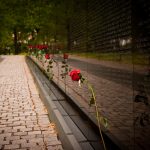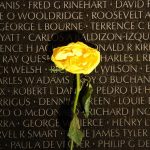
 The Vietnam Veterans Memorial Fund announced yesterday that their proposed Visitor Center received the final go-ahead from the National Capitol Planning Commission, which oversees the approval and design of monuments and memorials in D.C. The privately funded, $100 million complex will supplement Maya Lin’s 1982 Memorial Wall, with exhibits and programs to tell the story of the Vietnam War and commemorate the soldiers who fought it. The Visitor Center will be built just west of the Wall in the area between it and the Lincoln Memorial; however, NCPC requires that it be completely buried and hidden from view, in order to preserve the openness and visual order of the Mall. The Polshek Partnership, architect of the Clinton Library and the Newseum/Freedom Forum, was selected in 2004 to design the Center.
As expected, the project is controversial for a number of reasons, the Post noted today. It will be the first visitor center on the Mall dedicated to a single conflict and its veterans, leading some to believe that veteran’s groups from WWII, Korea, and other wars will seek similar structures to accompany those memorials. Also, the Center’s mission to tell the history of the Vietnam Conflict with objectivity and neutrality will prove difficult, given the emotion and controversy the subject still generates.
Many supporters of a Visitor Center feel slighted by the design requirement that the Center be below grade, and not visible from the other memorials or surrounding sidewalks. They feel that hiding it out-of-site and out-of-mind is exactly how many veterans were treated when returning from the unpopular conflict.
Others dislike the proposed Center for the opposite reasons. To many, Lin’s wall captures the emotional and political turmoil of the conflict in ways that an educational center never could. Veterans and visitors cherish Lin’s design for the forced introspection it triggers. It draws out unpleasant memories of the conflict from those who sacrificed for it and were vilified, those who witnessed the prolonged misery and bloodshed on the nightly news, and those who opposed it with all their might. Everyone can reflect on the anonymity of the Wall’s 58,253 engraved names, and are left with their own feelings of sorrow, remembrance, pride, and patriotism.
For many with deep and personal connections to the war, having a tourist-oriented visitor center cannot elicit the same feeling, and may even detract from it. But the number of Americans without memory of the 1960’s and 70’s is growing. The Center’s supporters feel it is worth this price to teach them, and future generations, about this important and devastating chapter of our history.
Photo by Flickr user adrummer_boy.