On June 4, 1938, Sigmund Freud fled his home in Vienna after the Nazis arrested and interrogated his daughter, Anna, for five hours. As a Jew, Freud probably would have escaped earlier if not for his ill health (he was diagnosed with cancer of the jaw and palate in 1922). But it also would have been hard for him to leave his home of 50 years, where he practiced and made his couch famous (pictured). Freud would die later that year in London.

Luckily, before he left, Freud took his colleague August Aichhorn’s suggestion to have the contents of his apartment photographed. Aichhorn’s friend, amateur photographer Edmund Engelman, photographed Freud’s extensive collection of artifacts, which included more than 3,000 sculptures.
Engelman’s photographs appear with the works of Ferdinand Schmutzer and Trude Fleischmann in the show Freud’s World in Photos at the Austrian Embassy. The exhibit celebrates the 150th anniversary of Freud’s birth.
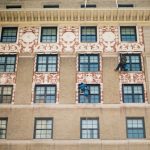
Engelman’s photograph of Freud’s picturesque cobbled street best illustrates the tension that drove him to emigrate. The street looks ordinary … if you disregard the swastika hanging over the door of building number 19, Freud’s home, sandwiched between a building marked Esten Wiener and one labeled Sieg M. Kornmehl.