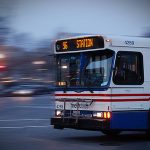
So we’re guessing by now, you’ve all seen the orange light bars that have been installed on Metrobuses to make them more visible to pedestrians. After seeing them the first time, we have to admit, our reaction was less than optimistic. Can a noisy, 50-foot long hunk of red-white-and-blue glass and steel be any more visible? Whether it’s an oblivious pedestrian or a careless driver that is the cause of an accident, would a 12-inch long flashing LED really have made the difference?
But then the folks over at Governing.com gave us an idea… If you grew up in the eighties, upon seeing these new additions to your local bus, you might have made the same association they did: Knight Rider. The similarity to the Knight Industries Two Thousand, aka KITT, is unmistakable (and our commute now makes us yearn for the days of melodramatic, hour-long action dramas on a daily basis).
The question is, why did Metro stop with the lights? If Metro really wanted to make its buses better and safer, why not take this idea to its obvious conclusion, and install the rest of the technology used in KITT?
Think of the possibilities! The Knight 2000 Microprocessor would never let a bus fall behind schedule. Even the worst traffic could be avoided with a quick Turbo Boost. The beloved voice of Mr. Feeny would courteously yet sternly tell passengers to move to the back, and announce each stop. The impenetrable Molecular Bonded Shell would protect buses from even the worst rock attacks by neighborhood youth. And the Auto-Drive Collision Avoidance System has obvious applications.
So c’mon Metro, and let’s get some vision! We fully expect you to begin working on this, at least, after you finish implementing the rest of our Metrobus recommendations.