 As a Japanese immigrant growing up in West Virginia, Hiroyuki Hamada spoke little English. Frustrated by the inability to communicate, Hamada started to create his own language through art. Now on view at the Randall Scott Gallery, is a collection of this language and an exploration of texture, form and composition.
Hamada uses various materials to create large two and three-dimensional artwork. Many of the pieces take several years to finish. Layering the numerous materials and techniques is an extensive process and great care is taken to invoke the frustration of misunderstanding or the calm of understanding. Hamada utilizes burlap, enamel, plaster, tar, wood and wax, just to name a few, not counting drilling, carving and other techniques. The materials used are so well thought out that it is hard to distinguish one from the other.
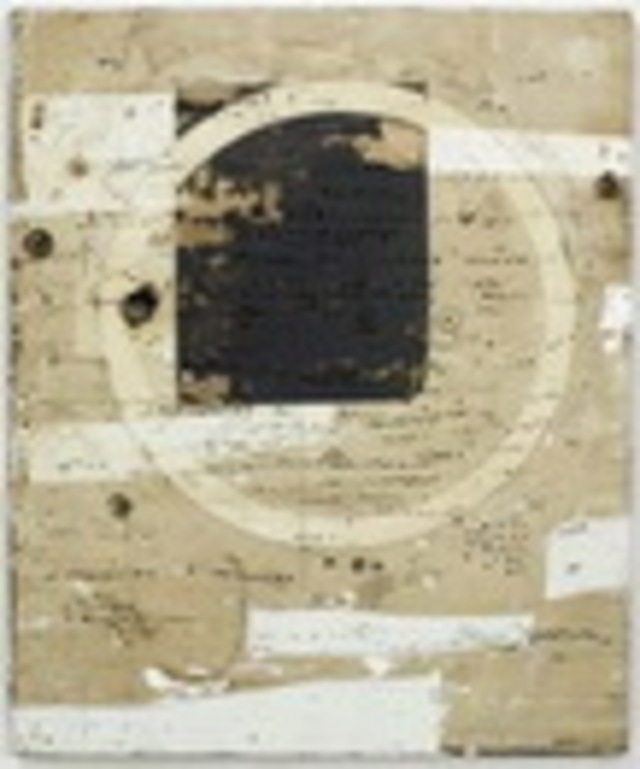
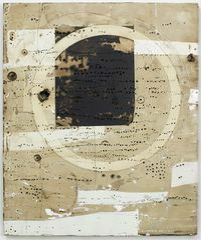
Hamada’s two-dimensional work is reminiscent of old wood, reclaimed and reworked. They are raw and earthy. Of note, #8A is hard and worn and lusciously textural. Several complex layers make up the final piece. Details including drill marks, paint lines, plaster holes and markings, are all interesting and beautiful by themselves, but as a whole make a stronger composition. The overlapping of large basic shapes brings a focal point to the piece, and sentences of drill marks are suggestive of Morse code or Braille.