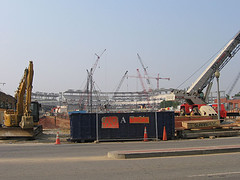
 Via this morning’s Examiner, the city is focusing on strategies to reduce the traffic impact of the new baseball stadium when it opens next April. One of the considered options is a reduced “ballpark fare” to try and entice more people to take transit. While reducing the amount of cars and congestion on game days is a certainly a crucial goal, the reduced fare doesn’t necessarily seem like it would make much of a difference.
The concern is that the stadium’s location, which is less accessible by vehicle (compared to RFK) and larger crowds (thanks to the draw of the new facility) will cause crippling congestion. The city anticipates that an average 27,000+ crowd at the new stadium will get to the stadium mostly via transit (almost 50%). Another 40%, though, is expected to drive, which translates to almost 11,000 fans needing to navigate neighborhood streets and find parking more than 80 times a year. Would reducing the Metro fare get more people out of their cars and onto transit? We’re not so sure.
First of all, the benefit of saving $1 or so on Metro fare would hardly seem to register with someone who’s paying nearly $50 for a ticket, a dog and a couple of drinks. In fact, reducing the fare might even have the opposite effect, making Metro seem like the inferior option, where customers need to be guilt tripped into riding (a strategy that has failed transit systems for decades). The better focus for the city’s efforts would be to more fully promote the variety of transit options the new stadium will offer, as well as spreading the arrivals and departures out in time.
Photo by voteprime