Martin Austermuhle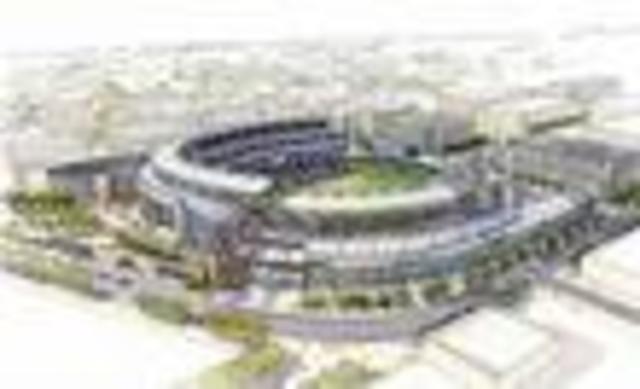
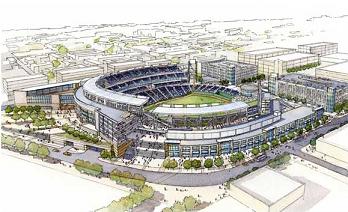 Coming in on the closing days for the Nats at RFK, everyone seems to be bracing for what the new stadium in Southeast and the surrounding area will have to offer. As the Post detailed earlier this week, huge chunks of land in Southeast and Southwest are slated for development, creating the potential of a new and vibrant Anacostia River waterfront in the coming years — much of it centered around the $611 million stadium. But will the stadium serve that purpose? Marc Fisher has his doubts.
Fisher, a long-time stadium booster, writes today that visits to Cleveland, Detroit and Cincinnati — all cities that looked to new stadiums as anchors for developing abandoned areas — proved to him that the $611 million the District is shelling out isn’t a surefire way to turn an otherwise blighted area into an urban success. He writes:
In Cleveland, it doesn’t seem to have worked. Jacobs Field is a terrific place to watch a ballgame. It’s inviting, seems smaller than it really is, fits well into the city’s grid, opens onto the city and has sparked development of a few big and crowded bars that capture some of the pre- and post-game crowd. The Indians do their part, hosting post-game rock concerts on an inviting plaza that looks out onto the surrounding streets. But walk even two blocks away from the stadium and there is precious little evidence of any improvements that can be attributed to the stadium’s presence.
Of course, we all hope that the area around the stadium at least follows the trend of the Verizon Center — even if that means a whole lot of chain restaurants and stores to suck tax dollars out of visitors’ pockets. After all, the debt financing alone is going to need that influx. But will the District follow the examples Fisher cites, or will the sheer number of development projects in the area work to bring and keep people and their money?