 Let’s get this out of the way: Whether you like it or not, Annie Leibovitz is an American Icon. Her intimate portrait photographs of the famous are so pervasive that even if you don’t know the name, you’re guaranteed to have seen her work, and lots of it. She began her career with Rolling Stone magazine when it was in its infancy, photographing the musically talented, and quickly became known for her deconstruction of human facades. A portrait of famed dancer Mikhail Baryshnikov, whose knees had not suffered well the brutality of decades of leaps and pirouettes, shows him being lifted high into the air by a colleague, imitating the peak to which he had brought his artform and the level of respect he continued to earn, even if his body could no longer prove it.
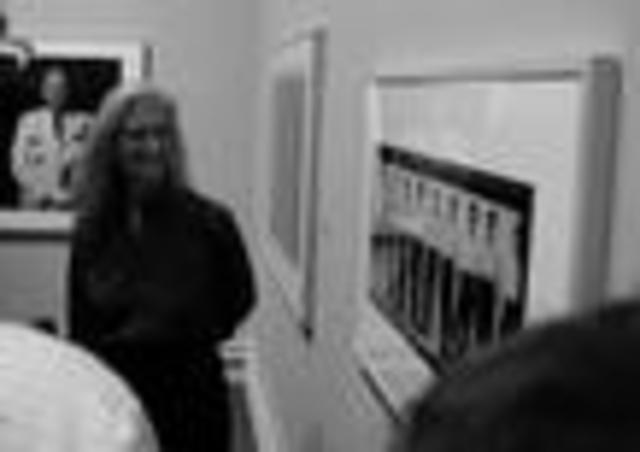
This photo, taken in 1990, marks the historical beginning of the exhibition A Photographer’s Life: 1990-2005, opening at the Corcoran Gallery of Art tomorrow. Its conceptualization began a few years prior, when in a very short period of time, both Leibovitz’s father and her decade-long lover, Susan Sontag, died, and her three children were born. Leibovitz is candid about the raw emotions that preceded this show, even going so far as to say that if she had the chance to do it over again, she wouldn’t.
The answer isn’t surprising, given the volume of personal moments included in the exhibit. While half the gallery contains the images by which we know her — a nude and very pregnant Demi Moore, a cinematically brooding Al Pacino, a stately General Schwarzkopf in spic ‘n span whites — the other half is filled with personal snapshots, from a day at the beach to Sontag’s last days as she battled and lost her fight with cancer.