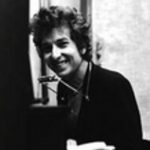
 Just who does Bob Dylan think he is? There must be a truth, a real life story way down underneath the layers of the biography that Dylan has created, but where that truth lies is probably only known to Mr. Zimmerman himself. So how does one approach making a film about the life of a man who has made a career out of self-mythologizing and asking us to please pay no attention to the man behind the curtain? Todd Haynes has the answer: play by Bob’s rules.
Bob Dylan’s name is never mentioned in I’m Not There. He does make a brief onscreen appearance, at the end, in archival concert footage. But aside from that, and aside from Dylan’s music, which the film is about just as much as Dylan himself is about his music, there is no direct connection between the film and the man. Haynes’ film has no straight lines, it is all collage and pastiche and an endless series of intersections that all, quite improbably, lead to a startlingly accurate (if abstracted) vision of the many faces of Dylan.
Six actors take on the role. There’s Marcus Carl Franklin, a 13-year-old African-American troubadour who goes by the handle of Woody Guthrie, travels as a vagabond on the rails, and has a fixation on Depression-era folk, forgetting that the Depression is long since done. Christian Bale is Jack Rollins, a painfully earnest civil-rights era folkie who disappears from view only to re-emerge in the 1980s as a born-again Christian and church pastor. Heath Ledger is Robbie Clark, the actor who shoots to fame when he plays the part of Bale’s character in a movie about Jack Rollins. Cate Blanchett (who looks more like Dylan than anyone else in the film) is Jude Quinn, an androgynous folk icon who alienates his fans by turning rock star. It’s the story that most closely mirrors real life. Richard Gere is, believe it or not, an aging Billy the Kid, who, in the film’s world, actually escaped the clutches of Pat Garrett and lives on in anonymity in a surrealistic, Fellini-inspired rural town. Finally, there’s Ben Whishaw, in the most obscure of the stories, who spends his entire segment cheekily answering questions while in the custody of an indeterminate authority figure and calling himself Arthur Rimbaud.
Confused yet?