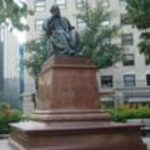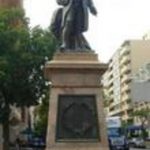
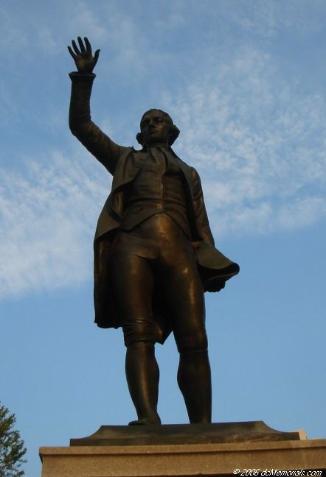
 The Edmund Burke statue on Massachusetts Avenue and 11th Street NW is a perfect case for the Revisiting Series. Not only is the face on the bronze statue unfamiliar, but even if a passerby—vehicular or pedestrian—did somehow recognize Burke’s mug (or could catch a glimpse of the “BVRKE” on the base), they would still most likely be curious as to why one of history’s most vocal anti-revolutionaries has been immortalized in the capital city of one of history’s most famous revolutions.
It was his Reflections on the Revolution in France that established Burke as such a prominent anti-revolutionary. He famously disputed the liberal views of those like Thomas Paine or the abbè Emmanuel Joseph Sieyès, who had been campaigning in favor of republican revolution since the Enlightenment.
In fact, Burke’s articulation of the importance of tradition and the danger of rapid change was so strong that it became a major tenet of contemporary conservatism. To some, Burke is the founding father of conservatism.
But for all the passion with which he opposed the French Revolution, Burke had a completely different reaction to the American one. He spoke publicly against the Parliament’s commerce policies with the colony, saying they had been uncompromising when pragmatism was needed, for he felt that authority must be wielded with respect for the temper of the populace. If so much of America was ready to revolt, he said, something was obviously wrong. He advocated measures to restore the colony’s trust in their imperial overseer.
Photo courtesy of dcmemorials.com.