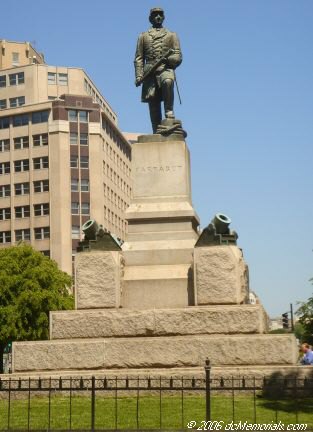
 When David Glasgow Farragut yelled, “Damn the torpedoes! Full speed ahead!” he probably didn’t think it would propel him into history. Actually, given the circumstances, it might not even have been the smartest of orders. But sure enough, Farragut’s ballsy command helped the naval commander get a huge statue and two metro stops plus a square named after him.
It was December 12, 1862, and the ship at the front of the formation, the USS Cairo, had just been blown to smithereens by one of the Confederate “torpedoes” (really just a five gallon jug filled with gunpowder and anchored to the bottom) that riddled the Yazoo River. The Cairo sunk in 12 minutes. The Union ships were confused and reeling when Farragut made the confident order, and, moving to the head of the formation, led the ships to victory—the rest of the dreaded torpedoes, in the end, failed to explode.
“The statue is now being cast” wrote a reporter in the hype that preceded the unveiling, “of the metal which drove the Hartford to victory and crowned with unfading laurels the memory of her great commander.” Sure enough, besides the statue itself, the surrounding mortars were also made from the metal of the propeller of the USS Hartford; and underneath the statue lay numerous documents from Farragut’s service, including a copy of the Army and Navy Register.
The unveiling of the statue took place on April 25, 1881, and had appropriate pomp. At twenty minutes to one, artillery at Lafayette Square blasted to notify President Garfield and the cabinet to head to the ceremony. In his remarks, Garfield commented on how “this capital is silently being filled up with the heroes of other times.”