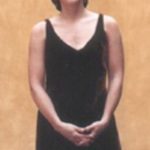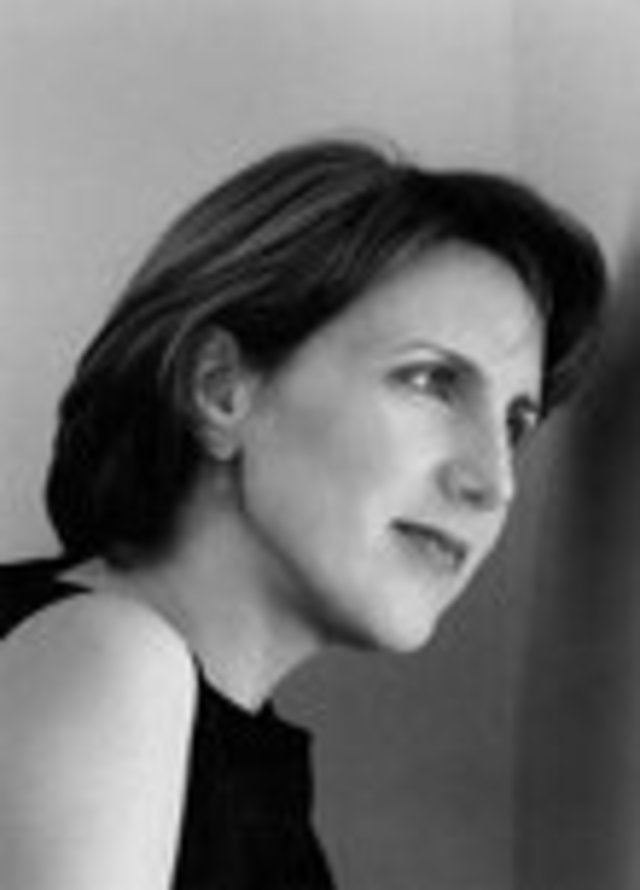
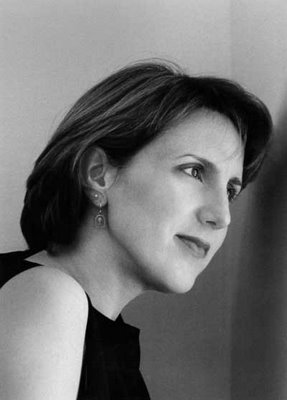
 Dawn Upshaw gave a sold-out recital on Wednesday night in the Kennedy Center Terrace Theater, as part of the Fortas Chamber Music series. The celebrated American soprano (pictured), who was diagnosed with breast cancer late in 2006, has recovered from aggressive treatment and returned to performing. The recipient of a MacArthur Foundation genius grant this past fall, Upshaw is beloved by listeners for her radiant voice and intensely dramatic style of singing. Addressing the audience after her first piece, Upshaw explained that her recital program had no overarching theme: the songs were selected, about one year ago, because they were “what I would like to sing after chemotherapy.” The capacity crowd in the Terrace Theater, who could not refrain from applauding after each and every song (ignoring the clear divisions implied in the program), was clearly delighted that she was able to sing them.
Much of the program was suffused with simplicity (Foster’s parlor song Beautiful Child of Song and Ives’s Two Little Flowers), whimsical humor (Debussy’s La Flûte de Pan and Ravel’s Le Cygne), and hammy playfulness (three of Bolcom’s Cabaret Songs). As many of the songs came from Upshaw’s burgeoning recital discography, the effect was a “Best of Dawn Upshaw” evening, with the added benefit of the sympathetic and vital presence of the singer herself. Indeed, many of the more serious songs on the program followed the theme of the singer’s ecstatic awakening, putting in my mind how precious music is and, as a result, how fortunate we are to have Upshaw’s voice in our ears.
Although she sings music from many periods, it is her championship of contemporary music, like the new song cycle by Dutilleux we heard her sing in 2006, that has been her greatest contribution. The undoubted high point of the recital came at the end of the first half, with two songs from Olivier Messiaen’s exquisite Poèmes pour Mi, selections recorded on Upshaw’s 2004 Voices of Light CD. A haunting, lovely performance of Le Collier (about the “necklace” of a lover’s arms entwined around one’s neck, poems by Messiaen himself) combined an opalescent melody from Upshaw in the refracted sunlight of harmony from the piano, played with impressive sensitivity by senior accompanist Gilbert Kalish.