 The last time the District held a presidential primary, in 2004, they scheduled it first in the country, before even Iowa or New Hampshire, in an attempt to bring more publicity to the D.C. voting rights movement. But in order to get permission from the Democratic party to do so, the primary was classified as “non-binding”, which led many of the leading candidates to drop out of the D.C. primary since it didn’t matter. Howard Dean, the only viable Democratic candidate on the ballot in D.C. that year, ended up winning with 43 percent of the votes, with the Rev. Al Sharpton coming in with the best results he ever has, in second place, with 34 percent. Of course, D.C.’s delegates at the Democratic convention ended up going 47 percent for Sen. John Kerry anyway, since they weren’t bound to honor the votes of the citizens they represented.
This year, much is being made of the so-called “Potomac Primary” set for a week from tomorrow, Feb. 12. A week after Super Tuesday, D.C., Maryland and Virginia will all go to the polls on the same day, and this time, D.C.’s primary will be binding. In the District, an estimated 38 delegates are up for grabs in the Democratic primary, and 19 are available in the Republican primary. Almost all of the D.C. GOP’s delegates can likely be expected to go to McCain — he won the most recent DC Republican Committee straw poll over Romney by over 8 percent, and except for three delegates reserved for the RNC, the Republican primary in D.C. is winner-take-all. The Democratic delegates, however, will be allocated in a rather complex algorithm that includes 10 District-level delegates who will be assigned votes proportionally, with the rest being a hodge-podge of unpledged and at-large delegates to be selected by the party in April.
For those of you who live in Virginia or Maryland and are curious about your own delegate distribution, we’ll point you to CQ’s nicely designed online primary guide. There you’ll also notice that while D.C. and Maryland’s primaries are closed to only people registered with one party or the other, Virginia’s primaries are open to independents and other parties.
For District residents, we haven’t seen much in the way of good polling data, especially since Edwards dropped out of the race, about which way D.C. Democrats are leaning. Obama volunteers did outpace Clinton volunteers by a huge margin in the delegate-selection caucus in January, but the Post reported over the weekend that Clinton had seriously out fundraised Obama within the region. So we thought we’d conduct our own, obviously not scientific poll, about which way D.C. Democrats are leaning. We’d ask those of you who are registered in Virginia, Maryland, or are not registered Democrats, to please refrain from voting in this poll. Yes, we’re leaving a ton of people out of this, and arguably, the Virginia and Maryland primaries could end up being a lot more interesting — we’ll get to those later in the week. We’re also making the bold assumption that the roughly 9 percent of registered voters in D.C. who are Republicans are going for current front-runner McCain, and that we don’t need to plumb the depths of their loyalties. All this poll is trying to achieve is a rough idea of which way the overwhelmingly Democratic District is leaning, at least among our readers. Obviously, it shouldn’t be taken too seriously, but we’re admittedly curious how the results will end up comparing to the actual vote tally next week.
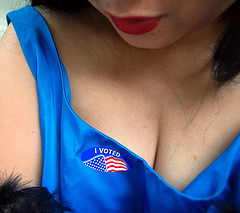
Photo by magandafille