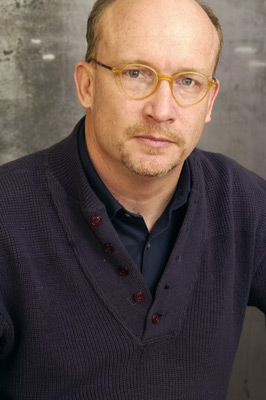
 Director Alex Gibney was recently nominated for his second consecutive Academy Award for his documentary, Taxi to the Dark Side. Gibney has a history of scathing documentaries investigating corporate and government wrongdoing. His previous film (also nominated for a Best Documentary Oscar), Enron: The Smartest Guys in the Room, examined the shocking levels of corruption at the top of one of America’s largest corporations that ultimately led to its downfall, and before that he adapted Christopher Hitchens’ damning profile, The Trial of Henry Kissinger for Eugene Jarecki’s 2002 documentary. With Taxi, the director takes on the United States’ interrogation policy, and the allegations of systematic torture that have been leveled at the Bush Administration in the wake of Abu Ghraib and the deaths of numerous detainees during the course of the war on terror.
The taxi in the title refers to Gibney’s framing story, about an Afghani taxi driver named Dilawar who was taken in with three terror suspects who were riding in his cab, and never survived his time in custody. The driver, innocent of any wrongdoing, became a symbol for the abuses inflicted on prisoners in U.S. custody not just in Afghanistan, but in Iraq and Guantanamo Bay as well. Gibney structures his documentary as an investigative piece, trying to get to the bottom of just what happened to Dilawar, and uncovering a larger picture that is disturbing and gut-wrenching.
The continuing story of this one man, threaded throughout the high-ranking officials shown in the rest of the film, gives a face and a name to scores of victims who have suffered the same fate, making the issue of torture not just a policy argument, but a story of personal tragedy. The film also has obvious personal resonance for Gibney through his father, a WWII Navy interrogator who delivers an angry and moving attack (not long before his own death) on the practice of torture at the end of the film. Many of the interviewees have similar firsthand experience as expert gatherers of information from prisoners, and their collective condemnation of the administration’s practices gives the film an angry motivation that coexists perfectly alongside its heartbreaking accounts and images of savage acts.
Gibney is in town for tonight’s 7:10 p.m. screening of the movie at E Street, and will answer questions after the film. As of this writing, tickets are still available. The director also took the time to answer a few questions from DCist: