
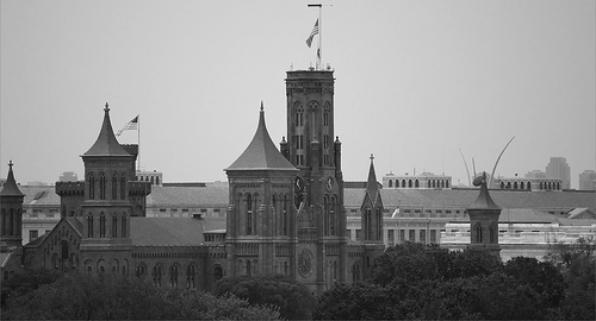
Last week, Sen. Chuck Grassley (R-Iowa) and Sen. Arlen Specter (R-Pa.) submitted a bill that would bring the Smithsonian Institution under the Freedom of Information Act and Sunshine Act, a position the Institution has eluded for decades. Anyone who’s followed the scandals over the past couple of years, starting with former Secretary Lawrence M. Small’s excessive expenses and eventual ouster in March of last year, knows that transparency is crucial to win back public trust in the Institution and hopefully end the corruption and misuse of funds.
One can almost read the glee with which the Washington Post reports on this new development — the paper has done a fantastic job exposing corruption inside the Institution, and is largely responsible for its recent cleansing, but not without significant leg-work. Post reporters struggled for a long time to acquire the financial documents that exposed the swath of executives who abused their positions, eventually being forced to acquire them through alternate sources.
The current disclosure responsibilities of the Institution as a quasi-public agency are still essentially that they’ll hand over what they feel like handing over. Smithsonian reps say that even though not compelled to by law, their practices are good enough, insisting that they do their best to respond to every public inquiry. As the Post notes, however, if the Smithsonian declines to produce a document, there is no appeals process (as there is under FOIA). Even now the Institution claims that their recent overhaul includes self-driven transparency, but the bill co-sponsors respond that the new era must include some kind of formal check on the process.
Photo by JAGalicious