DCist’s highly subjective and hardly comprehensive guide to the most interesting movies playing around town in the coming week.
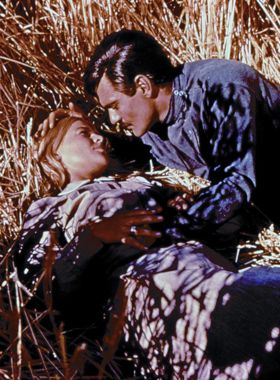
My earliest distinct memory of seeing a movie in a theater is at the age of four or five. Was it the latest from Disney, or maybe a Lucas space opera? No, it was Doctor Zhivago, which was showing at the local college. Whether or not my mother—or the lack of a ready babysitter—can be thanked (or blamed) for the 30-odd years of movie obsession that followed is debatable, but at the very least, having a three and a half hour romantic epic by David Lean as one’s first cinema memory is bound to make some kind of lasting impression. Having seen it again since then, I tend to prefer Brief Encounter for the romantic Lean, Lawrence of Arabia for the epic Lean, and Bridge on the River Kwai for the wartime drama Lean. All the same, Zhivago stands alone as the director’s most fully realized synthesis of his four major areas of expertise (throw in his penchant for classic literary adaptations as number four).
The source material, Boris Pasternak’s Nobel Prize-winning novel, was an instant classic in its own right, a political history of early 20th-century Russia told via the eponymous Doctor and the conflicted life he led, pulled between duty to his wife and love for his mistress (who he is constantly separated from and reunited with) amid the tumult of the first world war and the Russian Revolution. The novel is painstaking in its details of the lives of the protagonists. The chief gripe, in fact, about Lean’s adaptation is often how much he left out, which is a little staggering considering the 197 minute running time of the edit being shown this week. Omar Sharif, of the soulful eyes and smoldering good looks, plays the doctor, Julie Christie the mistress. Supporting turns are made by an impressive cast including Tom Courtenay, Alec Guinness, the always crazy Klaus Kinski, and a particularly hateful Rod Steiger.
View the trailer.
Opens tomorrow and runs once each afternoon for the next week at the AFI.
—
Manoel de Oliveira, Portuguese Marvel
It is often the case that in the anniversary year of a director or actor’s birth, festivals of the artist’s films will spring up everywhere, celebrating a life and work that is usually long since complete. The case of Manoel de Oliveira, who was born 100 years ago this December, is no different on first glance. A retrospective was shown in New York in the spring, and a similar one begins this weekend at the National Gallery. What makes this different from the norm, though, is the fact that not only is de Oliveira still alive, but the director is still producing films, at the Woody Allen-ish pace of one per year since he was in his early 80s. But in a very non Woody Allen-ish fashion, his late work is regarded as the equal of his early films, if not his career’s ongoing pinnacle. The director, who, for political reasons, produced a scant handful of films during the first half-centry of his life, has become increasingly active, producing a wide variety of work that runs from documentary to narrative film, from black and white to color, silent to sound, and short to 7+ hour epics. A retrospective of his work is as much a look at nearly a full century of film as it is a look at one man’s creative life. The National Gallery has selected 15 films from throughout his career, starting this Saturday with his first film (a silent short, Douro, faina fluvial) and his first feature (Aniki Bóbó).
Opens Saturday at noon at the National Gallery of Art and runs on various dates through the end of September. See the NGA’s schedule for specific dates and times.