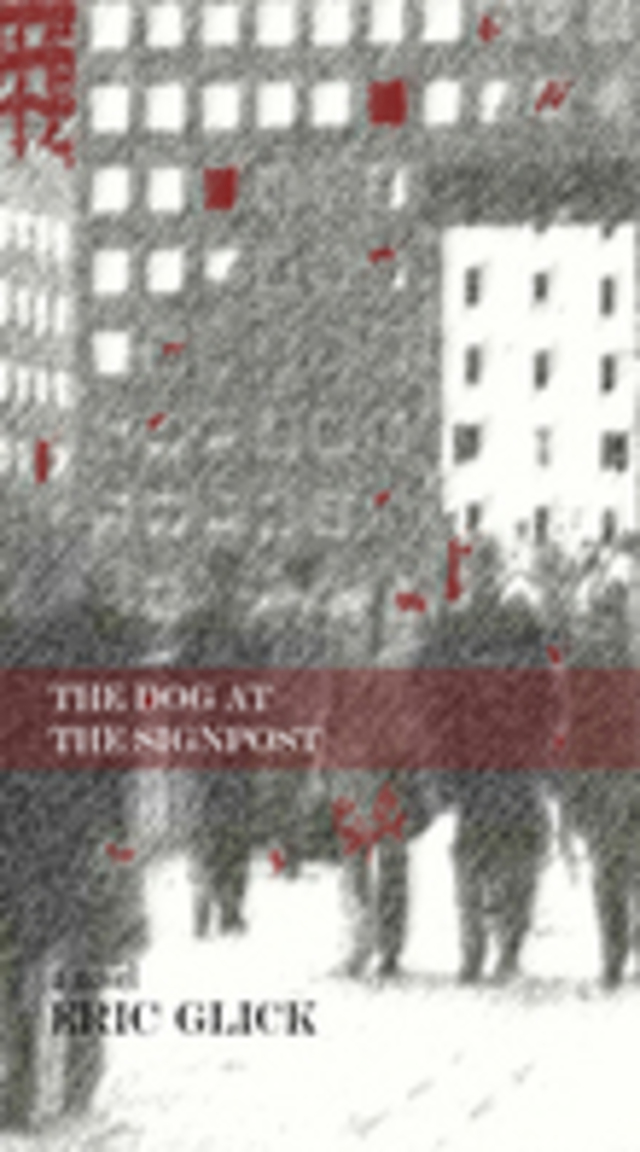
 A simple interpretation of “Chekhov’s gun,” a literary device made popular by author and playwright Anton Chekhov, is that if there’s a gun in a story, at some point somebody should fire it. In other words, every detail in a story, no matter how small, should exist to move the narrative along. Even if the hypothetical gun is never fired, its very existence could be used to create an unnerving atmosphere crucial to the story. There are plenty of guns, metaphorical and real, in Eric Glick’s The Dog At The Signpost. However, in the metaphorical sense, some get fired and some don’t.
The Dog At The Signpost, Glick’s debut novel, is best described as the story of a man who suddenly doesn’t know what to do with himself. Joe Berzinski lives alone, daydreaming of his wife and trying to piece together why she walked out on him one morning with no explanation. He struggles to get through work, failing to meet the expectations of his particularly demanding boss, an ex-military man with questionable people skills. And he finds himself attracted to a waitress who unfortunately turns out to be his wife’s lesbian lover. One day, however, while en route to visit his father in the hospital, Berzinski meets a mysterious man who, like Tyler Durden in Chuck Palahniuk’s Fight Club, hands over his phone number and changes everything. Sort of.