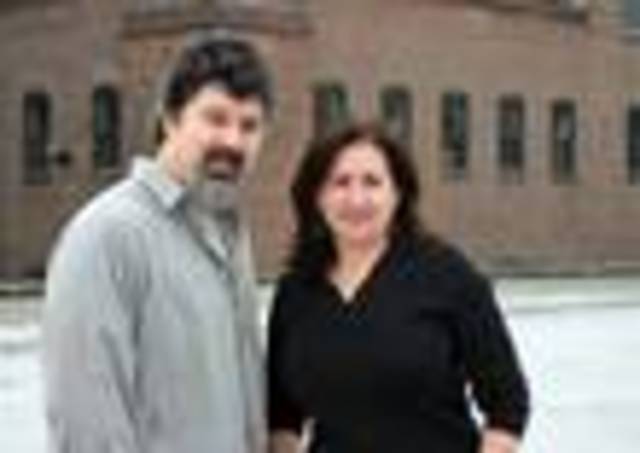
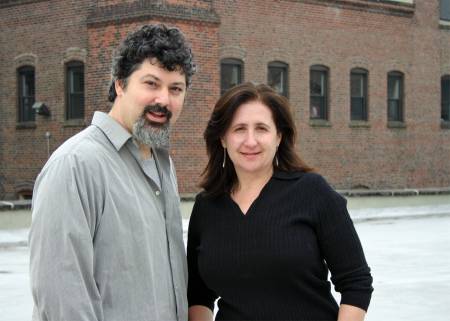
 Trouble the Water directors Carl Deal and Tia Lessin Trouble the Water directors Carl Deal and Tia Lessin |
Tia Lessin’s path to her first feature documentary as a director started right here in Washington D.C., and carried her through production duties on some of the biggest profile documentary projects of the past decade, including three Michael Moore films (and his TV series), and Martin Scorcese’s Dylan doc, No Direction Home. With her co-director Carl Deal, she has created one of the definitive documents of the impact of Hurricane Katrina, told through one young couple who attempted to weather the storm in the Lower Ninth Ward before being forced to flee on the rising waters. Trouble the Water was a particular highlight of the films we saw at this year’s SILVERDOCS documentary festival earlier this summer, and the film is opening today for a brief run here in D.C. at the Landmark E Street Cinema, where Lessin and Deal will be on hand at a number of screenings this weekend. Tia Lessin answered a few questions for DCist about her experiences making the film.
How quickly after meeting Kimberly Roberts and seeing what she’d shot did it become obvious that this was the story you had to tell?
My partner, Carl Deal, and I went to central Louisiana in the aftermath of hurricane Katrina to try to make sense of the horror we were seeing on television. We knew we wanted to tell a personal story and were essentially casting for characters. About four days into the shoot, we met Kimberly and Scott Roberts. They drew us in from the instant we met them—they were hard edged, self-described street hustlers who were also incredibly warm-hearted and generous of spirit. They had an extraordinary story to tell about their survival, and they also had a journey ahead of them. We were eager to see how it would turn out for them, and felt that an audience would be too.
It happened that a few days after meeting them, we were driving down to New Orleans, and Kim and Scott wanted to go to salvage what they could from their home, so we invited them along, and that trip provided much of the first act of the film. It was a couple of days later when Kim showed us the footage that she shot during the hurricane. We’d never seen anything like it. It was most definitely not the Katrina broadcast on TV. This was ground zero. It gave us a way to tell a story from the inside looking out, instead of the outside looking in.
So while we continued to follow other characters after we met Kimberly and Scott, ultimately, nobody exposed themselves as honestly and generously as they did. We were captivated by their optimism in a time of great tragedy, and the story of personal transformation that was unfolding before our eyes. All other storylines we followed became secondary to that.