 For those of us who spent our childhood (or adulthood) glued to oldies radio stations, reliving a mythical golden era, Martha Reeves is more than just a household name. Her years with the Vandellas constituted one of the most successful runs during Motown’s halcyon days in the mid-’60s. You can’t flip on BIG 100.3 FM or go to a wedding these days without hearing “Dancing in the Street” or “(Love is like a) Heat Wave”, and “Jimmy Mack” and “Nowhere to Run” have never fallen out of steady radio rotation. Mrs. Reeves came to town last week — to play a show, sure, but also to pay Congress a visit in support of her chosen cause, musicFIRST.
Reeves is one of the driving forces behind the artist and association joint effort to get performers paid by radio stations for airplay. The law has remained the same for over 70 years — despite new laws giving artists compensation for satellite and cable airplay — but the issue is gaining traction on the Hill. Senators Patrick Leahy and Orrin Hatch joined with Congressmen Darrell Issa and Howard Berman in issuing the “Performance Rights Act” to ensure fair pay for artists when their performances are broadcast on the air.
In addition to musicFIRST, Reeves — a 1995 inductee to the Rock and Roll Hall of Fame — has served on the Detroit City Council for four years and continues to tour. DCist had the supreme honor of sitting down with her Friday to talk legislation, love songs, and life lessons with us over chili half-smokes at Ben’s.
So how did you first get involved with the musicFIRST coalition?
Well, I was on the board of AFTRA, the Detroit branch. We’re always trying to help artists and trying to see how we can make life easier for artists, especially those that have been with us [Motown] for a while. We’re celebrating fifty years of recorded music in February 2009 and I was asked if I thought we should get paid for the music that played on these stations. Most people have our recorded music in their homes already; in fact it’s been revised, reissued, and there are plenty of records that have the same songs by different artists on them, so we don’t expect to have any more money from sales – which was a third of a penny anyways. And you hear a DJ do his rap and play your music and people assume we get something – a third of a penny or something – when they play it on the station, they play it on a regular basis you can hear it everyday. I wondered why we weren’t getting paid, and looking to history, we found its never been a payment of a record that’s being played. Frank sinatra’s family could probably use some – they’re selling stamps now – some of his airplay money. Now there are thousands of groups emulating the Coasters and the Drifters and these groups could use some compensation now. We didn’t just record the music, we had to do record-ops and sockhops and travel all over the world and make friends and sell records and you know, do the repeats. Somebody asked me how many times I sang “Dancing in the Street” and I’ve never had to count, but it’s a good thing it’s a happy song and its fun to do.
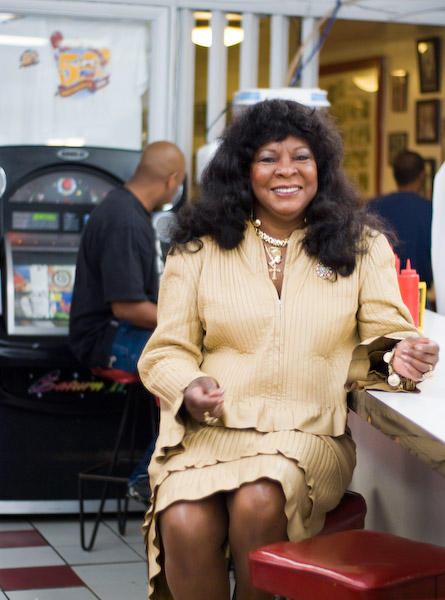
Photo by Meaghan Gay