DCist’s highly subjective and hardly comprehensive guide to the most interesting movies playing around town in the coming week.
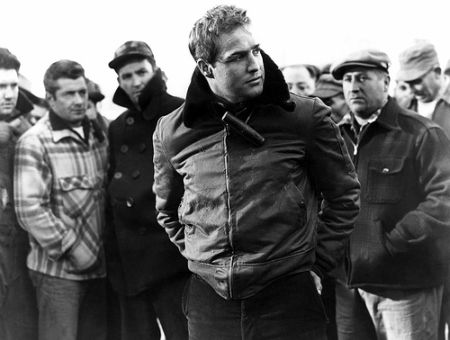
One of the defining films of the ’50s, Elia Kazan’s On the Waterfront stars Marlon Brando in one of his most mesmerizing performances, as a former boxer working as a longshoreman on the New York City waterfront. When he witnesses a crime that could put away the dictatorial mob boss who also runs the dockworkers union, he’s faced with the choice of staying quiet for his own safety or squealing. Complicating matters is the fact that his brother also happens to be the boss’s lawyer, pressuring him to zip it, and that a dead informant’s widow and the waterfront priest are encouraging him to tell all. It’s one of the grittiest studio pictures from that decade, and rightly regarded as among the career pinnacles for most of the major players, including Kazan, Brando, writer Budd Schulman, and the supporting turns by Eva Marie Saint, Rod Steiger, and Karl Malden. Kazan ratchets up the realism by shunning sets in favor of location shooting in Hoboken, and hiring non-actor tough guys for a number of the film’s thugs.
As great a film as it is taken purely on its merits, it’s even more fascinating when not divorced from its real life context. Kazan, fresh from helping the HUAC blacklist a bunch of Hollywood commies, makes a film extolling the virtues of naming names to avert danger and strike down oppression. It might have come across in a more noble fashion had the film’s mob boss been a better allegorical match for the kind of folks whose lives were damaged by Kazan’s testimony — folks like Kazan’s former pal Arthur MIller, who actually wrote the original On the Waterfront script only to get fired in favor of Schulman, who was, you guessed it, also a congressional informant. It was an ugly time, and there’s little question that Kazan did some ugly deeds to help out some ugly people, at the expense of some of the greatest artists of the day. Still, there’s no need to hold all of that against a great film. Even if On the Waterfront was made with an agenda, Kazan was smart enough not to let that mess with a good story told well, and his characteristic brilliance as a director infuses every frame.
View the trailer.
Wednesday at 7 p.m. at the National Portrait Gallery‘s McEvoy Auditorium. Free.
—
Considering On the Waterfront‘s subject of laborers and unions, it might just as well be a post script to the annual D.C. Labor Film Fest, which opened last night and is screening worker-related films all weekend and into early next week. Last night’s opening screened a couple of higher-profile films that already had theatrical releases earlier this year (to largely tepid reviews), so there wasn’t much to miss there. The real attraction are the lower profile indie and foreign films the festival showcases, like Chop Shop, about a 12-year old orphan making a living at an auto body shop in Queens (which played for a week at the AFI back in April), or Man Push Cart, about a Pakistani immigrant who operates a Manhattan food cart. There are also a couple of silent classics on the bill, which look at the plight of workers in the early part of the 20th century, one (The Crowd) focusing on white collar workers, and the other (Chaplin’s Modern Times) on the blue. And, of course, festival mainstay and cult classic Office Space will have screenings, tonight, tomorrow and Sunday.
Opened last night and runs through Tuesday, with all programs at the AFI. See the AFL-CIO’s website for the schedule.