In which DCist interviews area scientists, researchers, and academics on topics pertaining to natural and scientific interests. As Thomas Dolby would say: science!
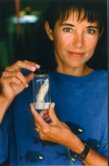 Carole Baldwin, a Smithsonian Institute research zoologist, is the curator of fishes at the National Museum of National History’s newly opened Sant Ocean Hall. Baldwin spent 14 weeks in 1998–99 filming a 3-D IMAX documentary on marine life at the Galapagos Islands. A systematic ichthyologist, Dr. Baldwin has discovered new species in Belize, Tobago, Cook Islands, Australia, El Salvador and the Galapagos Islands. Much of her research centers on deep-sea fish and its genealogical relationship with coral reef.
DCist: An exhibit in the Sant Ocean Hall mentions a mass extinction event near the end of the Permian era that killed 95 percent of ocean life. How did the 5% survive? Does all ocean life today descend from those five-percenters?
Carole Baldwin: Global mass extinction events don’t wipe the slate clean. In other words, not everything dies: there are “winners” and “losers.” Paleobiologists do know that some of the species that survived the Permian extinction were widespread, suggesting that they had adapted to varied conditions. That adaptability may have helped them survive the upheaval. Survivors of mass extinctions are all that’s left to give rise to new species, so, yes, all ocean life today descended from that 5% that survived the Permian extinction!