 Drink in the Details is a monthly column highlighting spirits and classic cocktails written by DC Craft Bartenders Guild members Adam Bernbach (Bar Pilar) and Chantal Tseng (Tabard Inn).
Somewhere in time, the image of mezcal has become synonymous with the liquid medium in which university campus pledges transport their worms. Not ringing a bell? What about the Mexican bar in movies? Perchance the drink of choice in the watering hole where you shouldn’t drink the water? There appears to be something bizarrely effective about this image. We can be intellectually aware that the bar from the Three Amigos does not exist, but maybe there’s a needling sense that “El Guapo” would question your choice to enjoy a sip without sporting a strapping bandolier. It‘s almost as if one need be associated with debauchery and chaos in order to sip this “filthy mezcal fire water.”
But how did it get to this point? How did our view of mezcal become so tainted? Is it the Hollywood image of the Mexican saloon that has smeared mezcal? Is it the worm swimming around our insides that has made us squeamish? Is it the product itself that has offered little in comparison to its beloved tequila cousins? Is it (D), all of the above? It might be wise to discuss these, lest we continue to dismiss artisanal mezcals before we experience them.
Alas, the worm. Few of us see the rite of passage in gulping a worm (or scorpion or viper or maggot) and its fiery liquid bath in which it has likely choked out its last spirited breath. Over half a century ago, it began as a gimmick. Jacobo Lozano Páez, self-claimed mezcal connoisseur as well as the current owner of Atlántida, S.A., a small Oaxacan alcoholic beverage bottling company, both introduced mezcal to most Americans, and simultaneously, crippled it. He discovered that when the plant was cut for cooking a lot of these wigglers remained in the heart during production. These gusanos lived and fed off the maguey, or agave plants, and provided information to the palenquero (producer) about the quality of the plant for mezcal production. Their presence directly impacted the final product’s flavor and coloring (incidentally, one type, Gusano Rojo, larvae from the Hypopta moth, are actually a traditional Mexican delicacy found on many restaurant menus). Páez’s distinctive marketing twist on this was to add a gusano to the finished beverage and include with the bottle a small salt sack, seasoned with the same larva, dehydrated and ground with chiles.
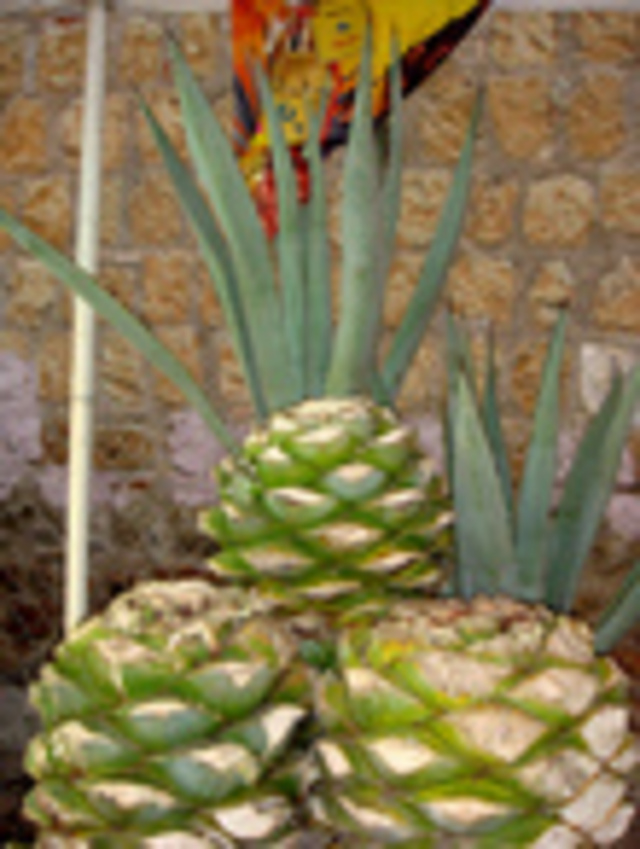
Image of agave plants courtesy of ybidau used under a creative commons license