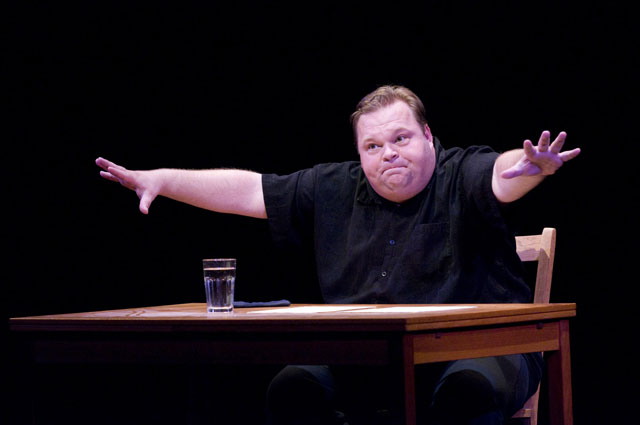
 Mike Daisey gets all worked up in “How Theater Failed America.” Photo by Kenneth Aaron.
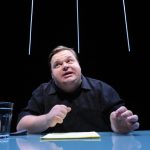
Mike Daisey doesn’t much care for How Theater Failed America as a title, but it’s more compelling, if less accurate, than How Theater Saved Mike Daisey. Which is presumably why Daisey, world-class raconteur that he is, answers the question of the title, more or less, in the very first scene and then moves on to the good stuff. Though “chapter” is a better term than “scene” for the pieces in which Daisey presents his absorbing, heartfelt, frequently hilarious autobiography-as-op-ed, in town for a two-week run at Woolly Mammoth. After all, he’s seated behind the desk that, with a single, shadeless lamp, comprises the whole of the set, for pretty much the entire evening, with a stack of yellow pages in front of him. Page-turn = scene change = new chapter.
“I have to wonder why so many of you would come to hear a story you already know,” he muses early on.
Daisey is due lots of credit for his willingness to bite the hand that feeds him, if only just. He calls himself a “carrion bird of the American theater,” aware that his popular monologues — 2001’s 21 Dog Years, about his spell as an Amazon.com clock-puncher; and last summer’s Fringe Fest hit, If You See Something, Say Something, skewering our post-9/11 tendency to see terrorists in our cereal, among them — appeal to theaters chiefly because they cost peanuts. He knows that if he’s on the stage, then a play is not. He gets some comic mileage early on by reeling off the usual suspects in the murder of American stagecraft: Reagan, the Disney megalith, iPods, and (ahem) critics. But when he comes round to prosecuting his case, his target turns out to be the theater companies themselves, particularly the ones mortgaging their futures to ornate new buildings when they literally can’t give tickets away to people younger than 30 to replenish an audience that’s aging and dying off. “You only play to the people in the house, and there are less of them every year,” Daisey observes ominously.