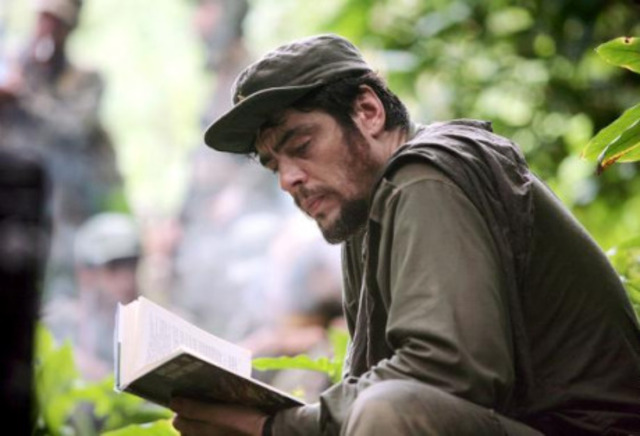
 Benicio del Toro as Che Guevara in Steven Soderbergh’s Che.
It’s difficult to imagine a figure more polarizing than the subject of Steven Soderbergh’s ambitious new biopic. Mention the name Che Guevara, or flash a picture of one of the endless variations on Alberto Korda’s iconic image of the revolutionary leader, and you’re bound to get an earful. But most reactions are of the knee-jerk variety, and are based more on reputation than history. Blind devotion or blind rage tend to be the reactions he inspires. Soderbergh’s surprisingly journalistic treatment of the facts of Guevara’s life is still likely to inspire vigorous debate, but from a more complete—and less black and white&mdashstarting point.
Soderbergh has stated publicly that he has no horse in this race; he’s not particularly pro- or anti-Guevara, he just found him a fascinating figure. And it shows. The detail with which the director moves through the three major events covered here is painstaking and impressive, and gives no free passes, even while it shows him as undeniably human. He’s saving lives, and then unapologetically defending the taking of them. The first half, which will be released on its own as The Argentine, details Guevara’s first meeting with Fidel Castro and the subsequent planning and execution of the Cuban revolution. Sprinkled throughout this section are scenes (in gorgeously shot black and white) of Guevara’s 1964 visit to the United Nations in his official capacity as a representative of the Cuban government. Del Toro’s fiery delivery of that famous speech is a particular highlight of Part 1.