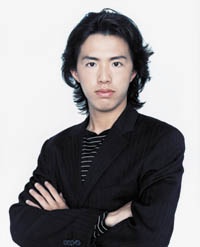
 Yundi Li
Yundi Li, a tireless performer on the concerto and recital circuit, returned to Washington this week as soloist with the National Symphony Orchestra. The Chinese Wunderkind appeared with the NSO two years ago to play Liszt’s first piano concerto, from the recording he had released that year. We opted instead to hear him play the work with the orchestra of the Leipzig Gewandhaus and Riccardo Chailly, and in the intervening year he was back in Washington to give a well-received recital at Strathmore recital. Of all the times we have heard Li play, this performance of Ravel’s G major piano concerto, heard on Friday evening, was the least satisfying.
Li paired the Ravel with Prokofiev’s second concerto on his most recent disc, where it provided an elegant Gallic coolness to the fiery pyrotechnics of the Russian work. With the NSO, he was most satisfying in the dreamy solo parts, where there was a detached gauziness and diaphanous trills. In the fast sections, the orchestra seemed disjointed, not always keeping in lockstep with the soloist. While the first movement has its Gershwin-esque blue notes, the second movement has been imitated countless times by arrangers of melancholy French songs, like those of Jacques Brel. Li’s performance had an often impatient quality, as he often drove his part ahead of the orchestra.
The French theme was introduced in the overture part of the program, the U.S. premiere of Pascal Dusapin’s Apex, Solo No. 3 for Orchestra. Dusapin is a leading voice in Europe, where his new opera on the Faust legend made quite an impression in 2006, and his music is becoming known on this side of the Atlantic. Guest conductor Emmanuel Krivine led the premiere of Apex with the Orchestre national de Lyon in 1995, and he is to be commended for bringing it to Washington. The work’s main theme is announced in the opening bars, a pulse on the timpani smudged by ominous growls from low brass, strings, and stentorian contrabassoon. Much of the piece consists of the gentle crystallization and amassing of static harmonic structures, with the crow-like croaks of muted low brass and other sounds as rhythmic punctuation, as well as gliding string clusters like the whine of jet engines. It was evocative, an effect piece of subtle color shifts, but without much to give the listener an intelligible overall shape.