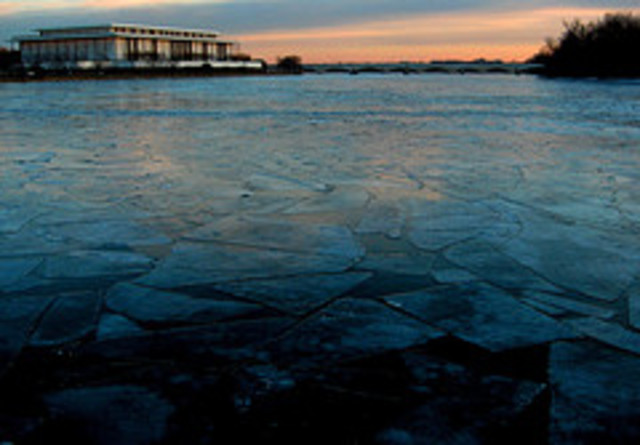
 Melted ice on the Potomac gets hockey fans thinking about a night at Verizon Center.
As D.C. prepares to host college hockey’s Frozen Four, the NCAA is discussing whether or not the ice will be, as the illustrious event’s name indicates, frozen. Of course they’d like it to be frozen. That’s the traditional condition of ice, especially for ice hockey. It’s just not how it usually is at Verizon Center, as Capitals defenseman Tom Poti told the Washington Post.
We’re surprised that Poti mentions waterlogged ice as a potential culprit in the team’s high frequency of groin injuries. Capitals who have suffered groin injuries this season include Viktor Kozlov, Simeon Varlamov and Tom Poti.
In our temperate climate, it’s not unusual for recreational rinks to feature damp areas or even bona fide water hazards. We just always assumed that the professionals didn’t have to put up with losing the puck on a breakaway because it got stuck in the water, or losing their balance on wet ice that provides too much drag for proper gliding and not enough comfortable grip for pushing off.
We hope the NCAA can offer some helpful suggestions before the groin injury wave hits any of the Caps’ three Hart Trophy winners or their Norris trophy candidate. On the other hand, we note that no one has yet tried to correlate the unusually watery ice conditions at the Verizon Center with the Caps’ record at home, which currently stands at 22-4-1. The Post has covered both the team’s impressive home record and their unusual home ice conditions this week, but they chalked the outstanding record up to bed rest and fan support.
When the Colorado Avalanche became a dominant team at home in the 1990s, analysts were quick to point out that opponents were not used to playing a mile above sea level, without adequate oxygen or air pressure, and that the Avalanche used this terrain difference to their advantage. Could it be that today’s Capitals have a similar advantage against visiting teams who are unaccustomed to playing ice hockey without ice? If so, is it worth the risks?
Photo by LaTur.