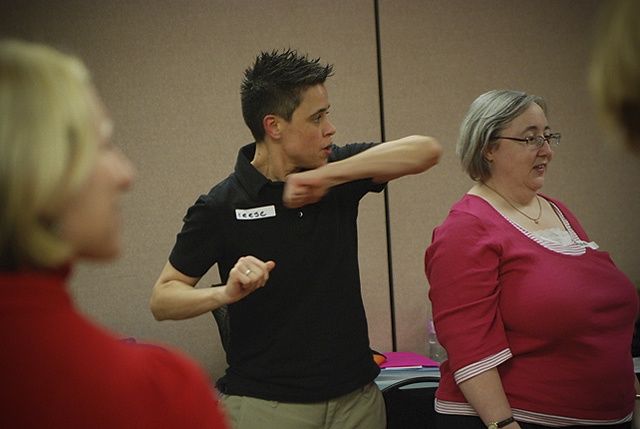
The black high heel Vanessa Schutz is holding suddenly looks pretty menacing.
“Temple! Throat!” she shouts, aiming at the air.
“Good! What are some other things we have in the office that you could use if you had to?” instructor Lauren Taylor asks the circle of 11 other women on a recent Monday night in Chinatown. They are starting session three of eight classes on rape-prevention with Defend Yourself, Taylor’s self-defense group.
They are full of suggestions: A book to the head. A water bottle to the nose. A pen to the eye.
“You don’t need to go through life thinking about being attacked,” Taylor tells them. “But you do need to be resourceful.”
Taylor’s workshops feature some things you might expect from a self-defense class: pummeling of padded targets, how to break a bear-hug from behind. But most of the techniques aim to stop an uncomfortable situation from progressing to an assault in the first place.
“People tend to think of self-defense as hitting,” Taylor says. “They think of feeling vulnerable walking alone in a parking lot – what would they do?” But most assaults against women, according to the U.S. Department of Justice, are committed by someone the victim knows — a coworker, a date, a person who knows their daily routine.