William Gropper, Construction of a Dam, 1939, Department of the Interior (courtesy of the U.S. General Services Administration, Fine Arts Program)
It is likely that most people, including Washingtonians, think about the Department of the Interior rarely, if ever. In fact, the most common response to the sex and drugs scandal that rocked DOI’s Minerals Management Service last fall was probably surprise that something interesting could actually happen in the Interior Department. While those nefarious activities were happening mostly in the Denver headquarters, DOI’s main location here in Washington is in an enormous building at 18th and C Streets NW that is well worth a visit. It was the first fruit of Franklin Delano Roosevelt’s attempt to revive the failing American economy through massive federal spending on infrastructure. If this sounds familiar, and not in a good way, consider just this part of FDR’s New Deal.
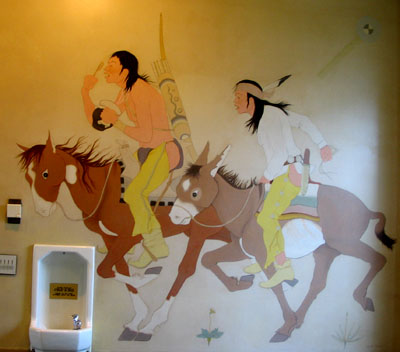 Allan Houser, Singing Love Songs, 1940, Department of the Interior (courtesy of the U.S. General Services Administration, Fine Arts Program)
Under the stewardship of Interior Secretary Harold Ickes, leading architect Waddy Butler Wood designed and built, in just 18 months, a state-of-the-art federal office building, with over 2,000 offices, all with some natural light and the latest modern conveniences. Among the most important and lasting benefits of the New Deal’s Works Progress Administration were federal projects for those in artistic fields like writers, actors, theater directors, painters, and photographers. For his part, Ickes hired Ansel Adams to make now iconic photographs for the National Park Service, and he commissioned an extensive set of murals to be painted throughout the DOI building, reflecting the missions of the department’s various bureaus.
If you want to see more Native American art than what the sometimes disappointing National Museum of the American Indian has to offer, Ickes gave special importance to the work of DOI’s Bureau of Indian Affairs, not least by establishing the Indian Craft Shop, which has been selling Native American jewelry, handicrafts, and artwork since 1938. In that shop, built in the style of a southwestern adobe pueblo, exposed vigas and all, and in other locations in the building, Ickes commissioned Native American artists Allan Houser and Gerald Nailor to paint murals on Indian themes.