 Photo by Karon
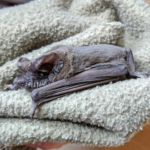
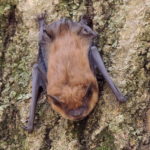
Are bats the new honeybees? They have been disappearing by the colony in the Northeast over the last three years, killed by white nose syndrome — a fearsome fungus that strikes bats while they are hibernating. Now, bats in Virginia and West Virginia have been discovered with the tell-tale white fuzz on their muzzles and wings. The Washington Post reports that white nose syndrome has infected colonies at Breathing Cave in Bath County and Clover Hollow in Giles County, both Virginia populations that scientists thought were at a safe remove from infected bats.
If you’ve lived any place with a large bat population (such as Austin, Texas), you know the crucial role that bats play in the ecosystem. Namely, they eat mosquitoes. Nature might consider some of their other roles as even more important, but people who live near bats love bats because bats eat bajillions of mosquitoes each year. By one scientist’s conservative estimation, “the million bats that have died would have consumed about 694 tons of insects in one year: the equivalent weight of about 11 Abrams M1 tanks.”
Tank operators might take comfort in the news, but natural scientists are sounding a serious alarm: White nose syndrome could drive entire bat populations to extinction. According to the Post, the disease is nearly completely fatal. And believe it or not, scientists think that humans may be spreading the disease to bats. The U.S. Fish and Wildlife Service is asking cavers to stay out of caves near or where WNS has been detected, a voluntary moratorium for caves in at least 17 states. Think about postponing that West Virginia spelunking vacation indefinitely.