Martin Austermuhle
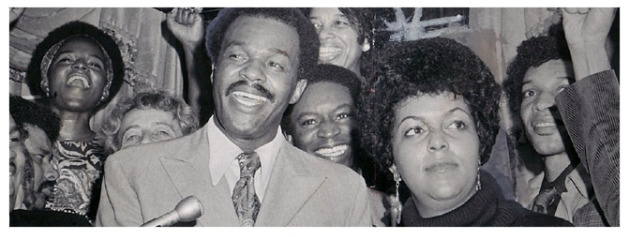
Most of America only really knows two things about Marion Barry: he was once the District of Columbia’s mayor, and he seemingly can’t stay out of trouble with the law. With yesterday’s HBO premiere of the new documentary, The Nine Lives of Marion Barry, it’s likely that many people have gained a broader sense of who Barry was and what he once represented for the District. But even with the additional context provided by the film, it’s less likely that all that many people will become more sympathetic to the aging local politico and his persistent troubles.
The documentary, produced and directed by filmmakers Dana Flor and Toby Oppenheimer, jumps between Barry’s 2004 run for the Ward 8 seat on the D.C. Council he still holds, and earlier, key years in his development as an activist and politician in the District. From his time as a rabble-rouser in the highly segregated D.C. of the 1960s to his first election to the newly formed D.C. Council in the mid-1970s, and eventually his four terms as mayor, the documentary tries to put Barry’s emergence in the context of a city whose residents were impoverished, disenfranchised and looking for a strong voice to speak on their behalf.
It is that moment in Barry’s life that has allowed him to remain an almost untouchable figure in District politics – even with all the drugs, corruption and womanizing. His constituents and supporters glorify what Barry once was, and he uses it as a means to excuse his many faults, both in and out of office. His 2004 challenger, Ward 8 activist Sandra Seegers, remarks at one point, “[Barry is] still running on his glory days. He plays on people’s sympathies.”