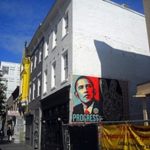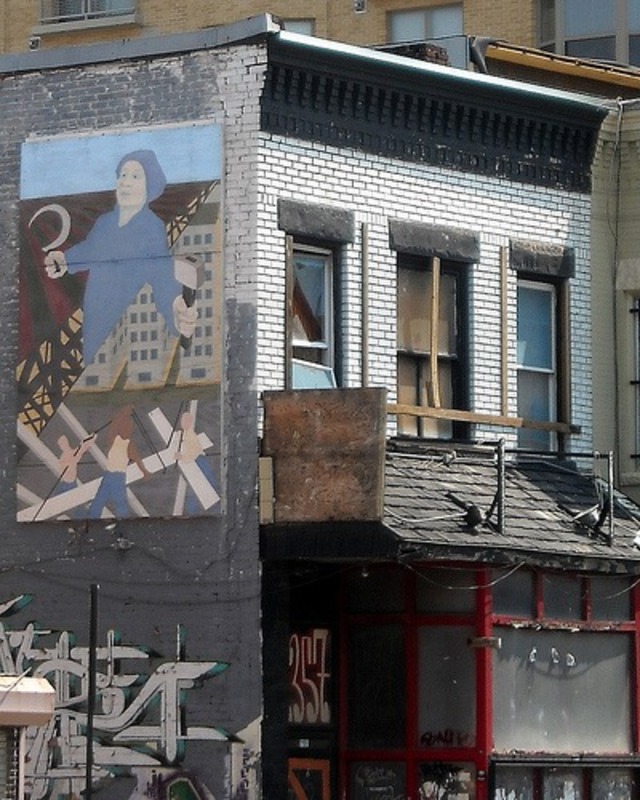
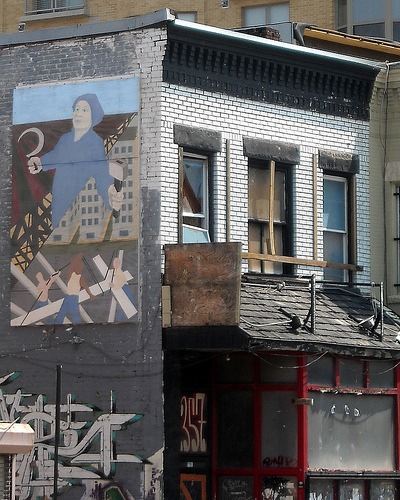
 Photo by NCinDC
This is a question I often ask myself when strolling by the intersection of 14th and U Streets NW (though thankfully a little less often now, since the long-awaited redevelopment of the buildings on the northeast corner nears completion). Matt Yglesias offers up the vacant building next door, however, as a case study in why, even accounting for the current recession, so many city storefronts in seemingly ideal locations remain vacant for so long. Assuming that a landlord has difficulty attracting a new tenant at the current rent, shouldn’t there be an incentive then to lower the rent? Isn’t some rent better than no rent at all?
Both Yglesias and Megan McArdle agree that Felix Salmon and Justin Fox are on the right track when it comes to the question of why, in the case of empty urban storefronts like those clustered around 14th and U or say, Cleveland Park, markets don’t clear: long-term commercial leases mean the incentives for landlords are different than you might first assume.
If prevailing leases are low, or tenants hard to find, the developer will quite rationally choose to keep the property empty. Leasing at a low rate will lock in a loss, while keeping the property empty has significant option value: at some point in the future, rents might well rise, and the developer can at that point lock in a profit instead. This is why successful property developers generally need very deep pockets: anybody who needs immediate cashflow, in the form of rent today, is in an invidious bargaining position and is likely to lose out over the long term.
In the meantime however, these rational landlords are helping to keep urban neighborhoods in a state of partial blight. No new jobs will be created by businesses opening in these spaces, the city will collect no sales taxes from them, and the accumulation of trash and degradation of public spaces surrounding the vacant storefronts actually costs taxpayers money.
So presuming this is the story behind many a vacant storefront in the District, wouldn’t it make sense for the city to siphon some cash toward making up the difference in rents for some of these long-term leases? Assuming the net gain in sales tax receipts and decreased costs to the city in upkeep would be more (and granted, that’s a big assumption) than the rent subsidy paid out, everyone would win.