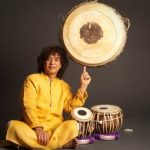
 From The Beatles and Ravi Shankar, to John McLaughlin’s Mahavishnu Orchestra, to Mickey Hart‘s collaborations with Zakir Hussain, South Asian classical music has long influenced western musicians. In recent times, the reverse is also true, what with hip-hop loops underpinning the latest bhangra and Bollywood grooves. But this West to East influence was less prevalent in the mid-60s, especially in the more traditional parts of South India, where a young Kadri Gopalnath had a life changing encounter.
“I was 15, on a school trip to the Mysore Palace,” Gopalnath recalled. “The palace band played once a week to tourists, and I saw a gentleman with a saxophone.”
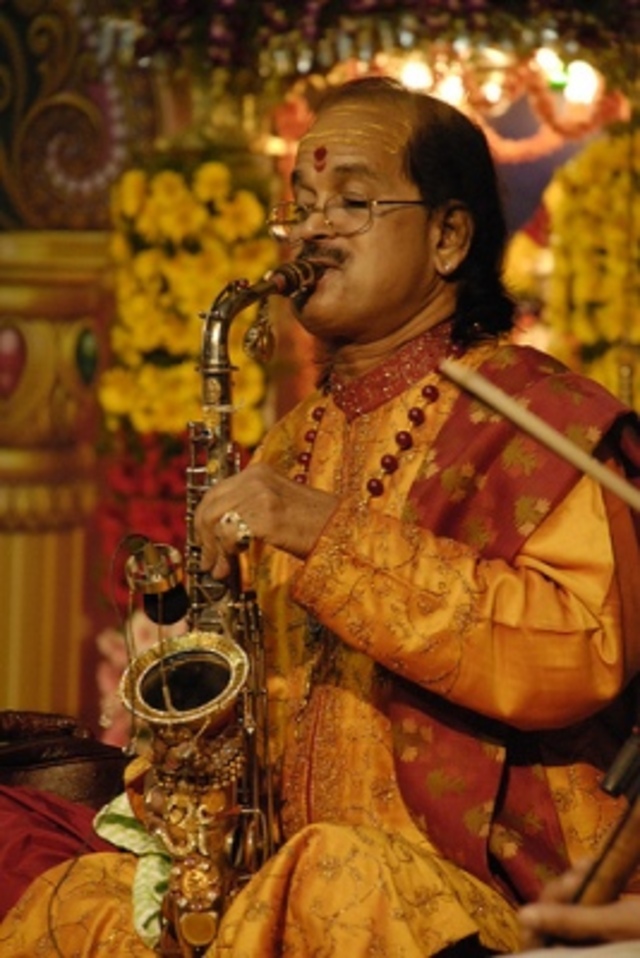
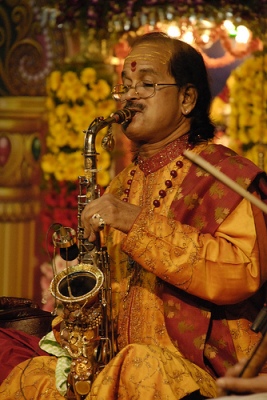
Gopalnath, who will be playing on Sunday at the University of Maryland’s Clarice Smith Performing Arts Center, came from a musical family, and had become a proficient Carnatic musician under his parents’ tutelage, as a vocalist and playing the nadaswaram. After seeing the palace band, he sought out a saxophone of his own, which at the time was no simple feat. Still, he was mesmerized by the instrument’s sound.
“Most carnatic instruments are a more like a female voice,” Gopalnath said, referring to the register in which Carnatic instruments are played. “[The saxophone] is more like a male voice.”