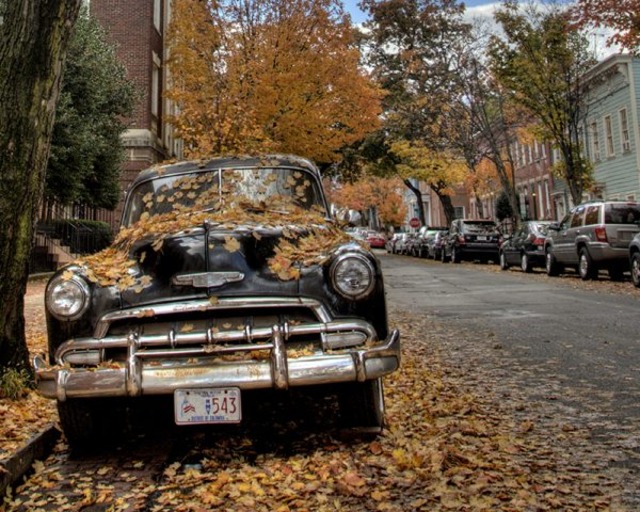
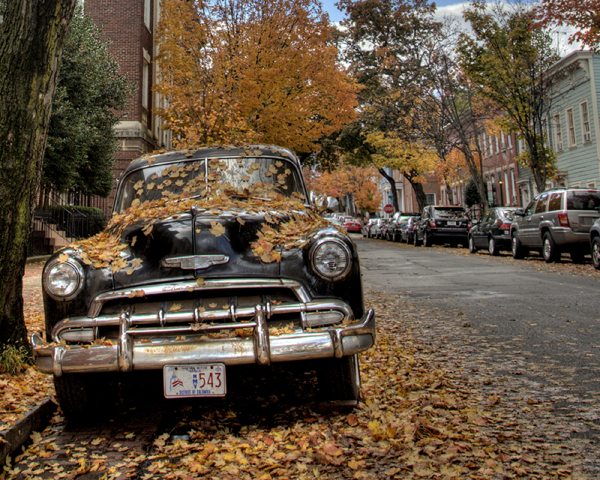
Cycle the Ghost Round‘s photo of what appears to be a 1949 Chevy Fleetline is a fall classic. A quiet Georgetown street, leaves blanketing the car, and a crisp autumn day with blue skies and fluffy clouds; just idyllic.
But in some photography circles, this picture is controversial. No, it’s not the subject or the composition, but the use of a technique called high dynamic range (HDR) imagery. Most cameras don’t have the ability to see as well as the human eye, and where we can look at a brightly lit scene and still make out details in the shadows, most cameras can only capture one side or the other of this extreme. Photographers can compensate for this by taking three or more exposures that capture the full range of luminance in a scene and combining them to produce a photo that more closely mimics what we can see in the real world.
There is no getting around the fact that HDR is often used in a ham-fisted, amateur way. But so are other, much less controversial, photo techniques and tools. A quick wander around our favorite photo sharing site will show the myriad misuses of flash, dodging, burning, saturation, and exposure control, to name but a few. The bias against new “electronic darkroom” techniques doesn’t help HDR’s case in the face of misuse by so many.
Today’s photo, though, makes you look twice when you notice it’s an HDR image. The tone mapping and dynamic range are natural, not amped up to the point where your eyes start begging you for relief. The typical hard edges between dark and light areas are no where to be seen, thankfully. This is the sort of image that serious HDR users should be striving to create, and photographers should be teaching themselves this technique to add to the skills in their digital tool box. (EXIF)