 Photo by frank.thorp.
The first paragraph of Reed Albergotti’s Wall Street Journal story today about the decline in popularity of the Washington Redskins tells you pretty much all you need to know about what he thinks, at least of our city.
In a town drawn up by a Frenchman, a place brimming with people who hail from somewhere else and who don’t agree about much of anything, the Washington Redskins managed to attain something any professional sports franchise would kill for: a giant fan base that loved them unconditionally.
Always nice to see that there’s still some reporters who haven’t hopped on the post-Obama “D.C. is great!” bandwagon.
From there, Albergotti goes on to call D.C. a “preposterous swamp,” we can only assume because the L’Enfant bit was not enough of a cliché dig. In order to solidify an argument that the Redskins just aren’t the draw that they once were, Albergotti highlights, among other slightly more legitimate points (like, you know, the fact the team has two playoff wins in the last ten years and tyrannical, profit-thirsty ownership): a Harris Interactive poll ranking nationwide popularity, John Riggins’ occasional tirades, and the arrival of the Nationals four years ago.
That’s right, the Washington Nationals are one of the reasons the popularity of the Redskins is suffering. We’ll pause while you finish that hearty laugh. On the bright side, at least Albergotti didn’t feel the need to spend 3,600 words on a reminder as to why the Redskins’ name is offensive.
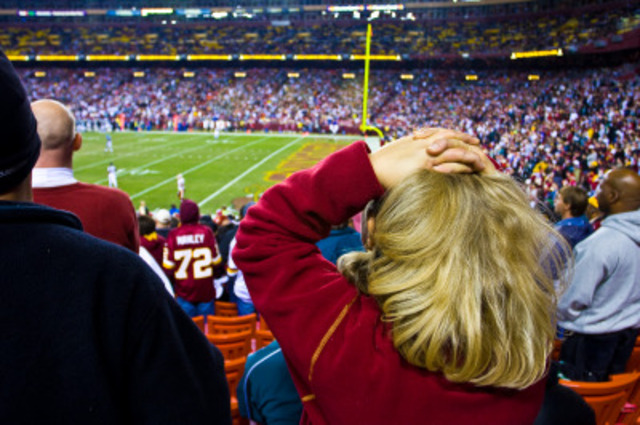
Despite the articles’ many obvious flaws, the underlying question Albergotti is offering is legitimate, if difficult to answer accurately. To be sure, this season has featured one crappy moment after another. But one of Albergotti’s few on-the-mark points is that 2009 has seemingly been the rock bottom of a mediocre-at-best, simply awful-at-worst decade for the Redskins. Any organization, sports or otherwise, would suffer from that kind of ten-year stretch; most, if not all businesses that experienced such repeated failures would have caved under the weight of poor public perception by now. That conclusion is what the article is missing – the dip in interest this season is not really an indicator that Washington is no longer a football town, but more a sign that the team’s normally enthusiastic fans are finally hibernating, waiting for the sweet, sweet turnaround.